
Have you worked in Gaza before?
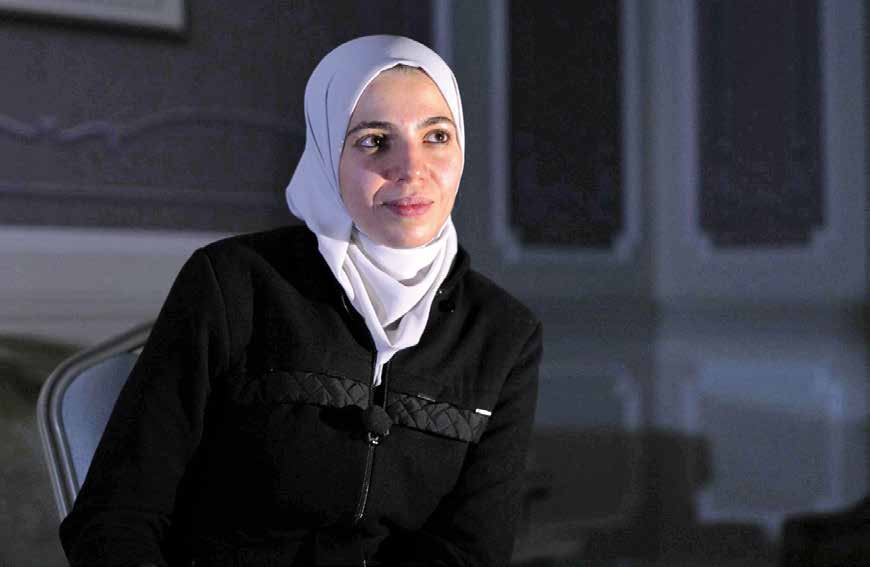
Yes, I have worked in Gaza, specifically in the city of Gaza. I am a native of this country, a Gazan by birth.
Were you there during this process at all times?
After the war started on October 7, I traveled to Gaza on the first day. Fortunately, I was the only journalist who managed to enter the Gaza Strip and report on the war and attacks. The following day, the Rafah border crossing was bombed and the gates were closed. Since then, no international journalist or journalist from outside the Gaza Strip has been able to enter. This marked the beginning of the challenges and dangers faced by journalists in Gaza, as they were cut off from the rest of the world while being subjected to various forms of violence, including killings, injuries, and starvation. The homes of journalists were being bombed, constituting a targeted and genocidal attack against journalists in Gaza.
Then you left. How did it happen? How did you feel?
Yes, I eventually left Gaza. It was a conflicting and emotional experience for me. I had mixed feelings about departing from Gaza. I wish I had left during the eight-day ceasefire when eight prisoners were released. The reason for this sentiment is that, as I was leaving, my homeland was still under attack, and my colleagues and friends, including fellow journalists, were losing their lives daily. Currently, an average of one Palestinian journalist is killed every day in the Gaza Strip, victims of the occupying army. The question on every journalist’s mind is, “Who’s next?” Departing while my hometown was engulfed in bloodshed was incredibly challenging. It reminded me of a famous Palestinian song with lyrics that express the sentiment: “Palestine, Palestine, my mother Palestine, my dear, my homeland, my mother, my dear homeland.” It was extremely difficult for me to part from my wounded and bleeding motherland and leave my journalist colleagues behind to die there.
What kind of stories did you capture during your time there?
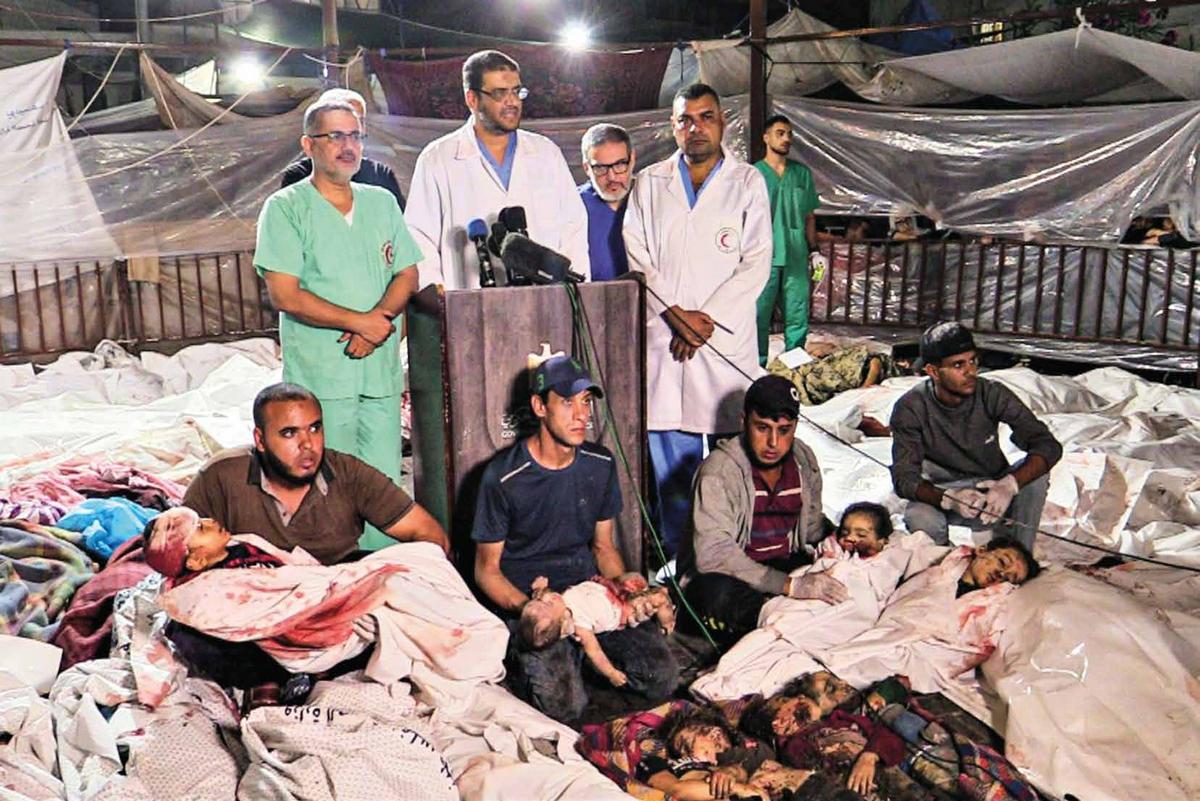
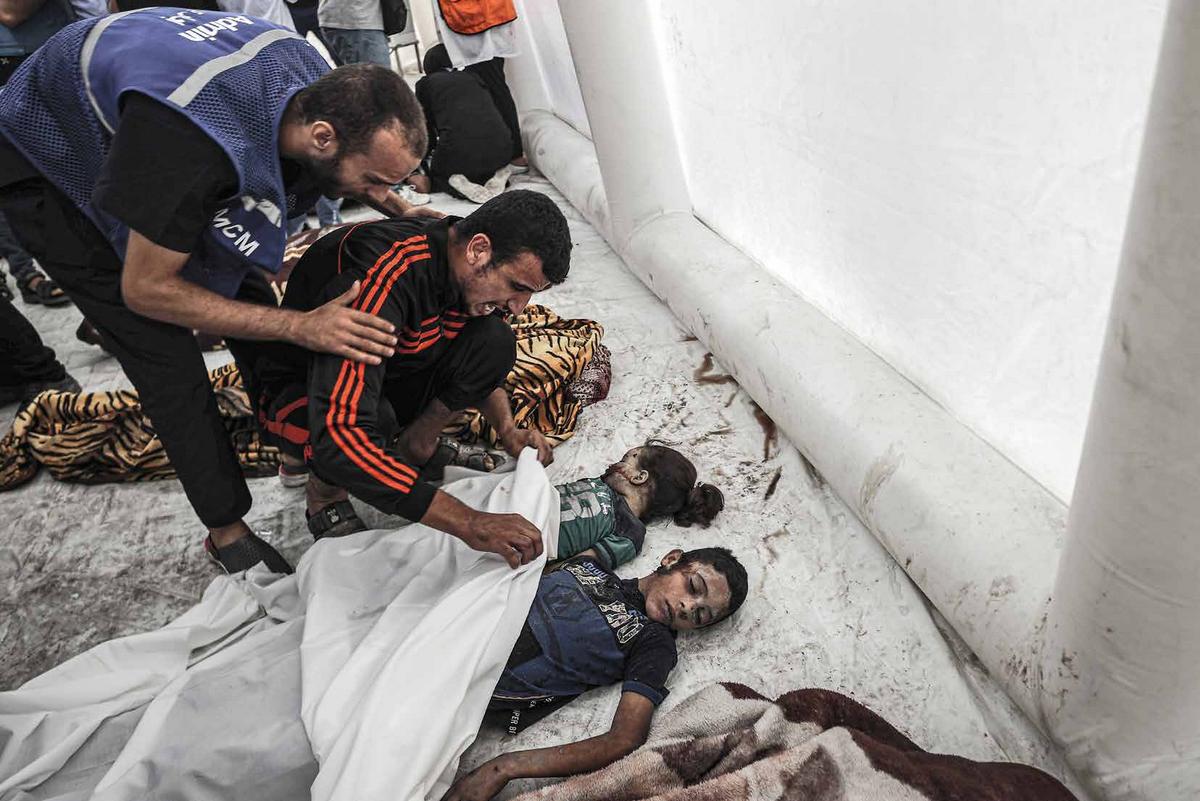
During my time in Gaza, I focused on capturing stories, particularly those involving children who had lost all their family members. I encountered six such children and covered their stories. The narratives were unfortunately repetitive, reflecting the harsh reality that many children had become sole survivors of attacks. In one video, a little girl was desperately searching for her injured family amidst the chaos. Ambulances were rescuing the wounded from under the rubble, and this girl, primarily looking for her mother and siblings, had soiled herself and was visibly embarrassed. At that moment, I made a conscious decision to prioritize the well-being of these children over our journalistic duties. It’s a challenging position when one is torn between professional obligations and humanitarian duty, but I firmly believe that the physical and psychological health of these children takes precedence. As a mother myself, having children who have been in similar situations, seeing these vulnerable children made me feel a profound sense of responsibility, prompting me to halt everything else and rush to help them out.
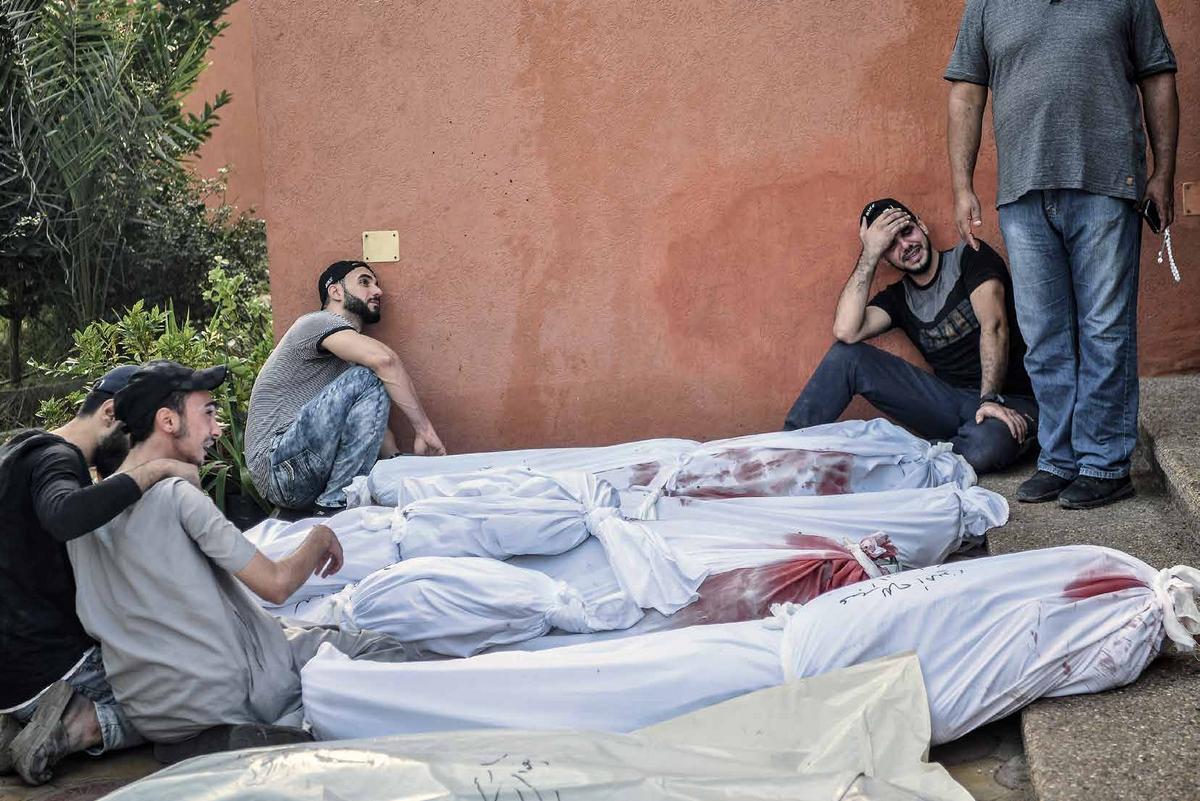
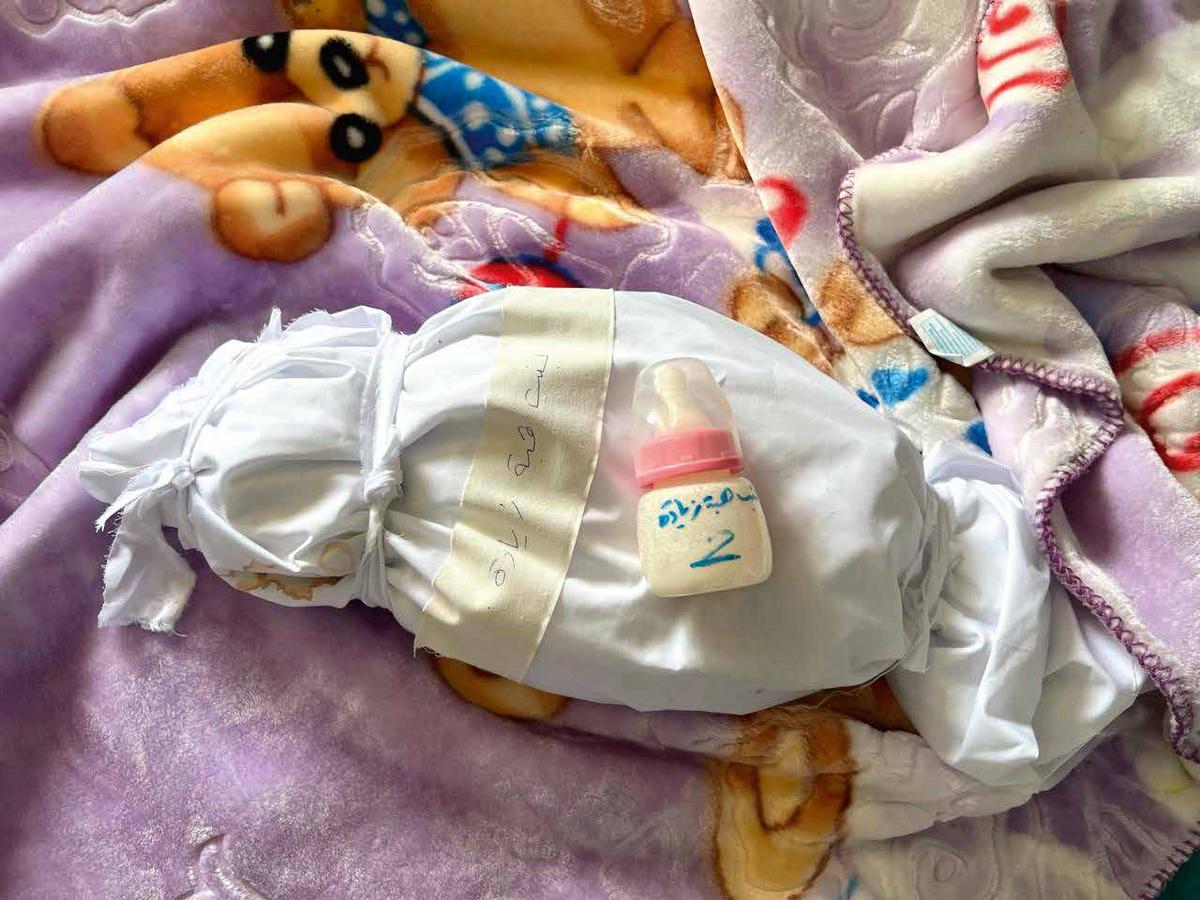
In another video, there was another child. In Khan Yunis, in southern Gaza, only one child from the Al Lamadani family survived the bombing. This boy had lost his entire family; his entire family had been martyred. He, too, came in wounded and bid his final farewell to his family in the morgue. The entire family lay shrouded. But at least he got to bid farewell to his family even though he was wounded.
Do you think Israel is targeting journalists deliberately?
Absolutely, Israel intentionally targets journalists. After the first or second, even the third or fourth incidents, you might call it a coincidence. However, it has become a routine occurrence in the Gaza Strip for a journalist to be killed every day. These attacks are undoubtedly deliberate. Why does Israel forcibly displace journalists and prevent them from carrying out their work in the northern Gaza Strip? Why did they push us south? Why doesn’t Israel allow international journalists to enter the Gaza Strip and report on the events? I believe the answer is clear. The simple reason is that we are exposing the genocide and crimes against humanity committed by Israel in the Gaza Strip.
You were with Muhammad Al-Aloul at the time of the martyrdom of his family. Can you briefly describe the experience?
That night, we were at the Nasser Hospital in Khan Yunis, south of Gaza. Anadolu Ajansı photojournalist Mohammed Al-Aloul’s family resided in the central region of the Gaza Strip. As night fell, Mohammed was still unable to reach his family. His house had been bombed by Israeli F16’s. Though Mohammed was talking on the phone, he couldn’t move by car, as everything that moved at night was a target. They continued to provide him with updates over the phone. The body of his first son was pulled from the rubble, and then his second son’s body was retrieved. Mohammad remained in a state of fear until the early morning hours, increasingly anxious about the possibility of having lost his entire family. I was live at the time, and Mohammed was sitting beside me. He waited throughout the night for the sunrise.
That night, I also witnessed the profound despair of a father who lost his children under the rubble in the cold, the crippling helplessness that emasculates a man. He didn’t know if they were alive or not, and all he could do was sit on that chair. Mohammad Al-Aloul waited until morning to go to the place where his children were, and he lost his children that night. Four of his children were martyred, along with many relatives, and some were injured. He stayed with us until morning. Later, Mohammed continued to work in the Gaza Strip as a photojournalist for Anadolu Ajansı, fulfilling his humanitarian mission to expose the crimes of the occupation in Gaza.