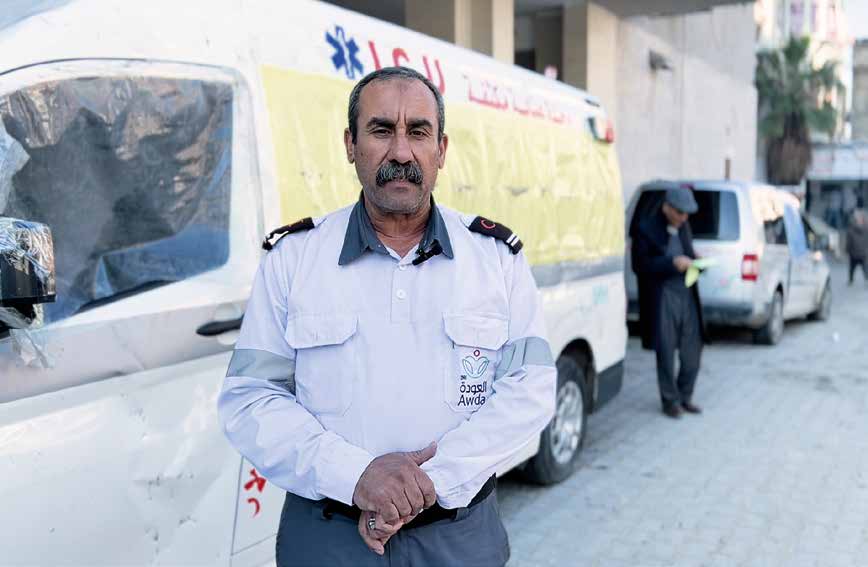

My name is Mu’in Al-Eish Abu Khalil. I oversee patient transport services at Al-Awda Hospital. I’ve been involved in ambulance services since 1987, dating back to the first intifada.
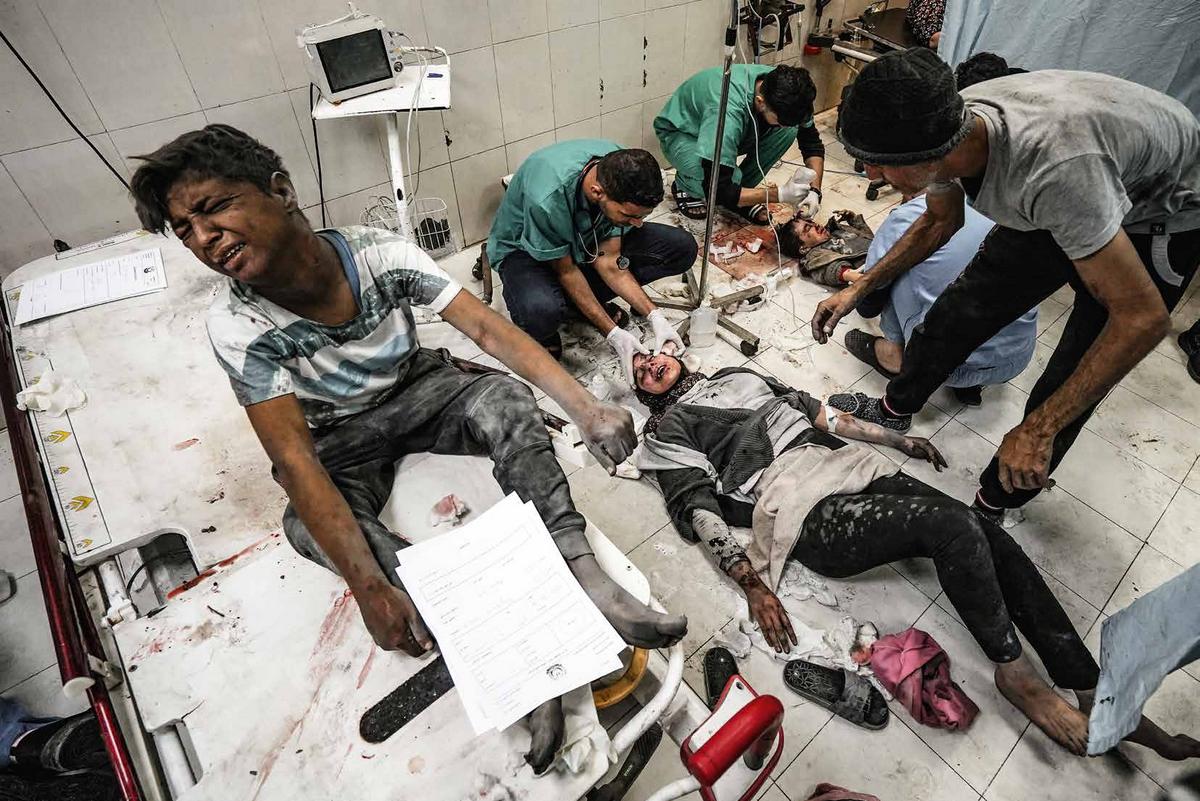
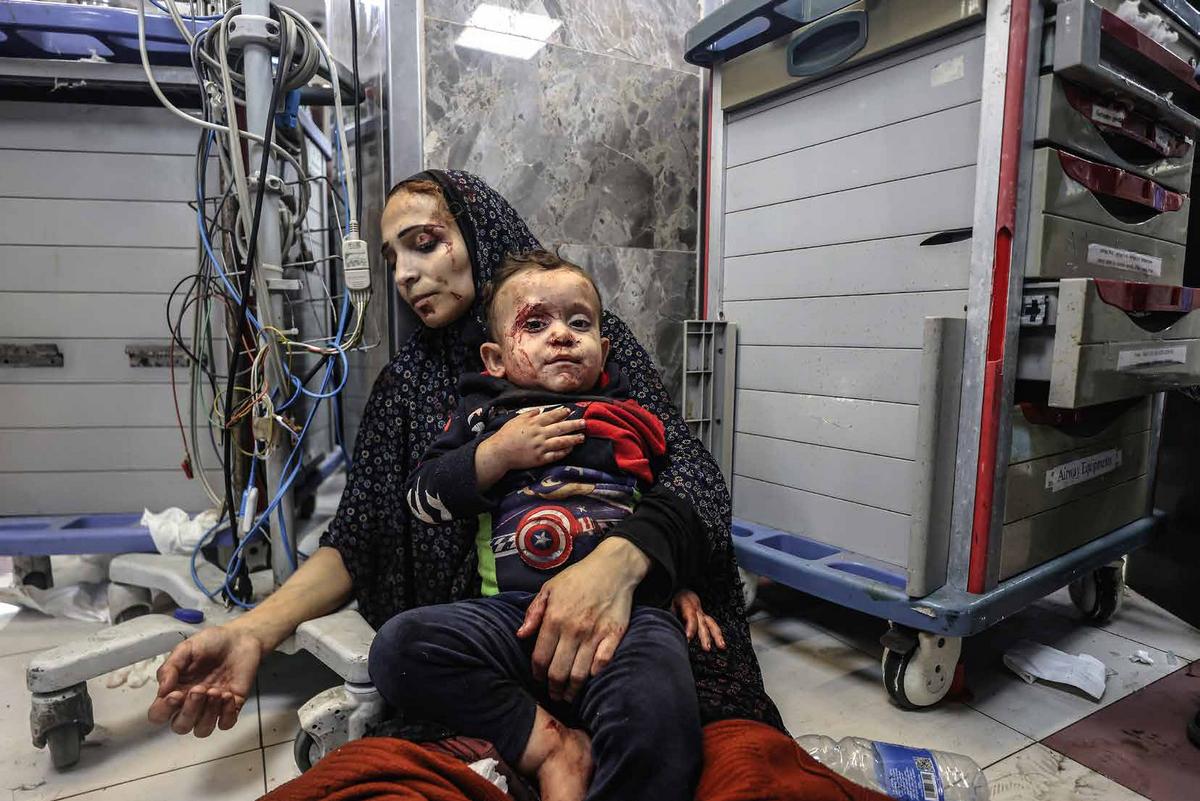
As part of the medical team, we operate both in the field and within hospitals, primarily as ambulance attendants, drivers, and paramedics. During the transportation of the sick and injured, whether from the scene or between hospitals, we have faced numerous direct and indirect attacks.
We have been directly targeted on multiple occasions. Soldiers, aircraft, and snipers have opened fire on us and dropped bombs, posing serious threats to our safety.
We were also subjected to indirect attacks. While carrying out our duties on the roads, we faced the danger of bombs falling nearby as houses, institutions, and streets were bombed. The shrapnel from these explosions sometimes hit the ambulance and occasionally the wounded inside.
During the siege of Al-Awda Hospital, ambulances within the hospital premises were directly targeted. Snipers aimed directly at ambulances. They also bombed them, shattering their windows and puncturing their tires, rendering stretchers and wheelchairs unusable.
They also targeted a vehicle carrying officers with a bomb, causing the rear of the car to catch fire and damaging the windshield and wheels.
These attacks rendered the officers working there completely incapable of performing their duties and made them direct targets.
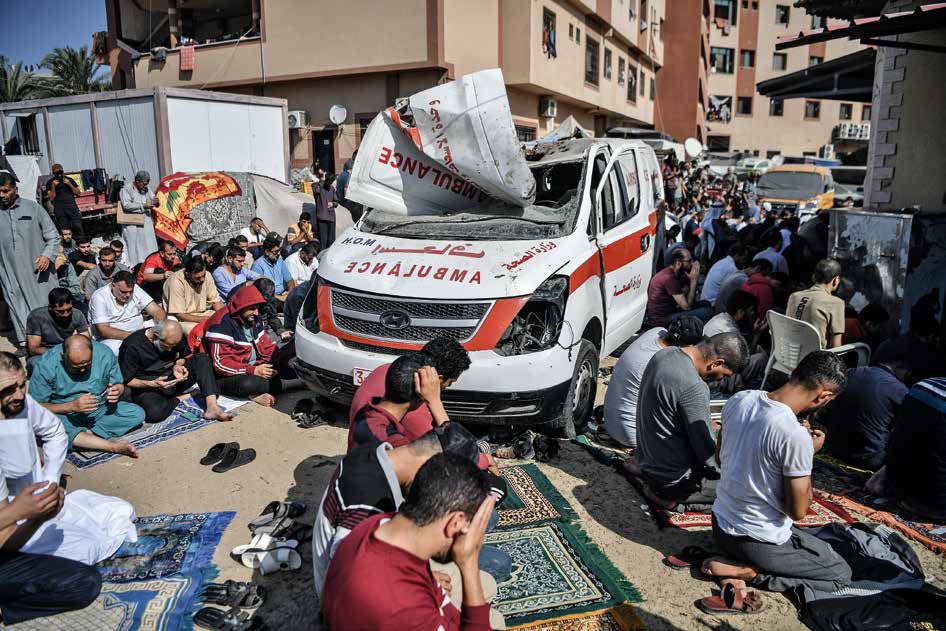
They also targeted the goods transport vehicle. The central warehouse facility was hit directly by a missile, rendering the plant inoperative and bringing all work to a halt. As I mentioned earlier, ambulances were repeatedly targeted and hit directly.
As you can see, all the vehicles here are in similar conditions. The windows and mirrors of the cars are broken—front, side, rear—all are damaged to the point of being unusable. The wheels are completely non-functional.
Despite the challenges, we are making great efforts to procure vehicles to continue our services. Thankfully, our ambulances in another garage have been repaired and put back into service. The wheels have been reattached, plastic sheets have been placed over the windows, and they have been returned to serving our people. We are striving to provide the best service possible under these circumstances.
Regarding the obstacles we face, the enemy disregards international rules. They show no respect for medical teams or ambulances. Ambulances are clearly distinguishable from other vehicles by their distinct color, signs, signal pennants, and sirens. It is unmistakably evident what an ambulance is and its purpose. The occupying soldiers and officers are aware of this distinction and can differentiate ambulances from other vehicles. However, despite this knowledge, they target ambulances carrying the sick and wounded, obstructing them from fulfilling their duties.
They aim to leave all the wounded helpless, without anyone to assist them. They don’t want any ambulances to arrive and provide medical aid, hoping that the injured will bleed to death. This scenario is unfolding across all areas, from north to south.
I am also a human being; I have feelings and emotions. Those who were targeted are the sons of my people, my neighbors, my brothers, my relatives. They were attacked wherever they were.
As an ambulance attendant, it’s heartbreaking to witness the destruction of homes and infrastructure. All roads are impassable, and although you see the injured, you are unable to assist them out of fear of being targeted yourself.
Frequently, those who attempted to retrieve the wounded from the scene were targeted by the snipers of the occupying force. Similarly, ambulances were directly or indirectly attacked with bombs while I was transporting the wounded to the hospital.
We appeal to international organizations, societies, and the free people of the world to exert pressure on the U.S. and Israel. We demand that Israel respects and ceases targeting medical teams and ambulances, and puts an end to the atrocities inflicted upon the Palestinian people in the Gaza Strip. They specifically aim at medical teams, whether inside hospitals, outside, or in the field. Their objective is to obstruct our efforts and prevent us from fulfilling our duty, leading to the wounded bleeding to death. They do not want us to rescue those targeted by their soldiers.