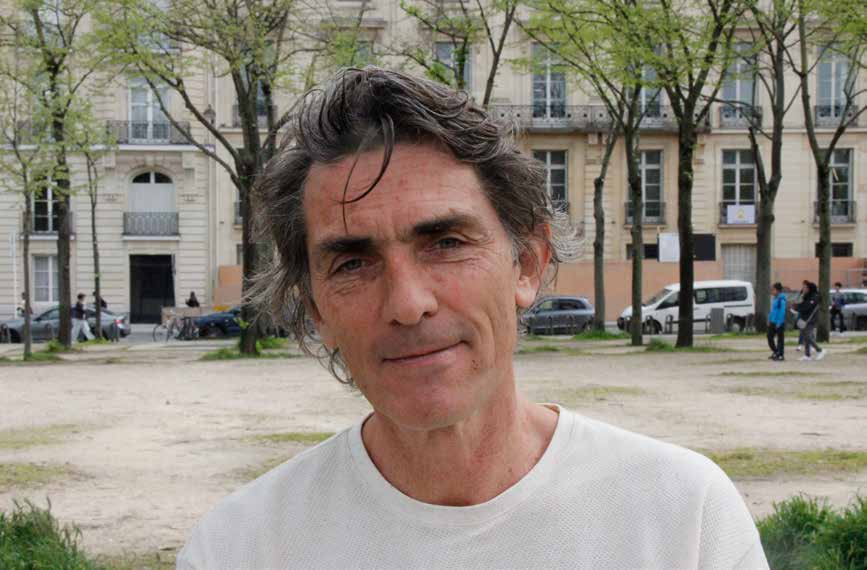

I’m Dr. Pascal André. I am currently working as an emergency physician in Aveyron, and I am trained as an infectious disease specialist. It was in this capacity that I went to Gaza, to Khan Yunis, between February 8 and 22 with PalMed (Academy), and then I went to the West Bank in April with the AMANI association.
First of all, we saw how difficult it was to gain access to the area— we had to wait four months before we could even enter. We were only able to enter with the help of Americans because, without American cooperation with the Israelis, it’s impossible to pass into Egypt since everything is interconnected. So, we witnessed that. And we also saw humanitarian aid that was absolutely necessary but had been blocked for weeks and months—just sitting at the Rafah border, only a few kilometers or even just hundreds of meters away from the people who desperately needed it. And then, as soon as we crossed into Rafah, we saw the desolation. By early February, the situation was already dire.
We saw people with vacant, exhausted eyes, descending on the trucks because when there’s no food, when people are starving, they throw themselves at whatever they can get.
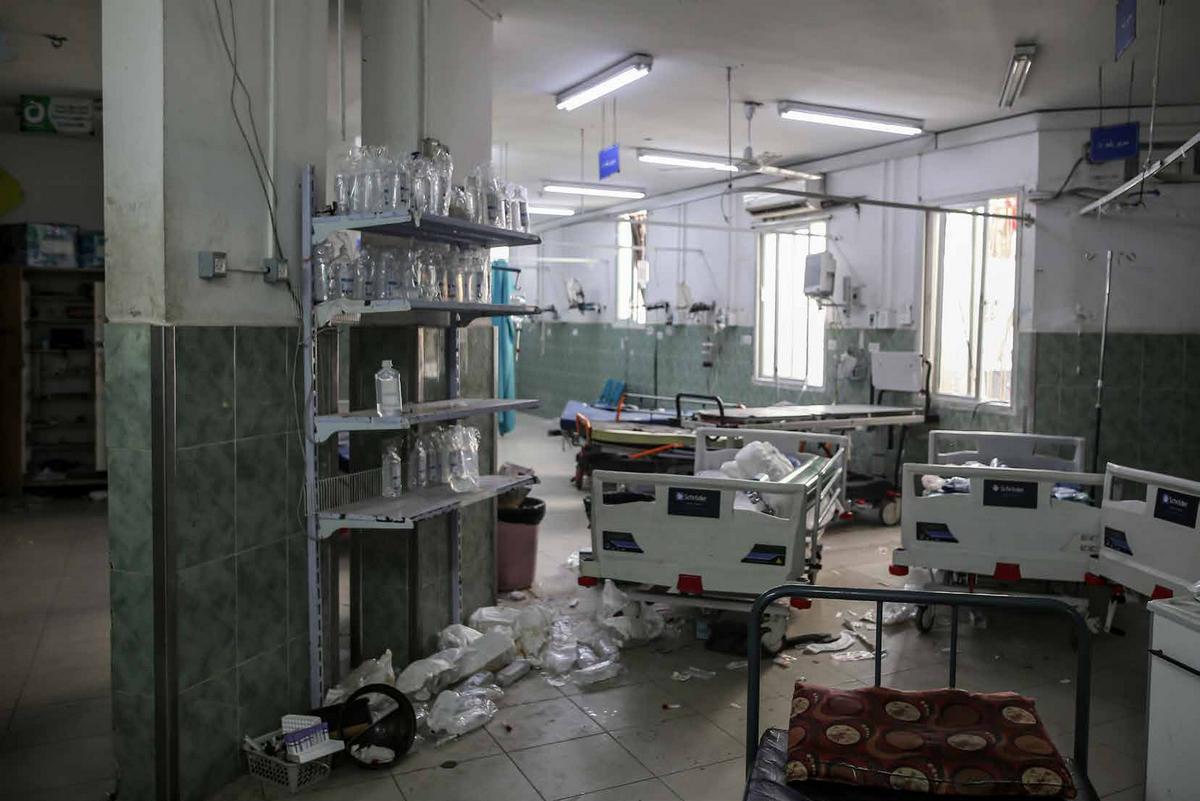
Then we arrived at the European Hospital, which is somewhat of a small, protected island because there are 25,000 people living around it and at least 4,000 to 5,000 people inside—a small hospital with only 300 beds, completely overwhelmed. Surrounding the hospital, in tents or in the nursing school, were many caregivers—those who had survived. These were local caregivers or those from other parts of Gaza who were there because it’s the largest hospital still functioning today.
While we were there, the nearby Al-Nasser Hospital was violently attacked. Many caregivers were taken hostage. It’s heartbreaking to see that the focus is only on the Israeli or binational hostages currently held by Hamas or other armed factions in the area. But we forget about all the civilian hostages, medical personnel, who have been in the hands of the Israeli armed forces or in Israeli prisons for a long time. So, we saw a population that was exhausted and terrorized—completely terrorized.
We even experienced the terror of those drones that hover constantly, day and night, deliberately there to keep you from sleeping, filling your head with a constant noise. (He mimics the sound) It’s a sound you hear even if you wear earplugs, use a pillow, or cover your ears with your hands—you still hear it. And people live with that, live with bombings that are almost constant.
For now, the bombings haven’t hit the European Hospital, but they are happening very close by. Just last week, it was only 300 meters away. And there are caregivers who are giving everything they have, even though most of them haven’t been paid in five months. Some have managed to continue. They’ve received 500 euros or the equivalent in dollars over the last five months.
Most of them are what they call volunteers, meaning they come from other hospitals and work for free. They are entitled to food aid from UNRWA when UNRWA is funded. And they work while constantly worrying about what will happen to their families when the bombings are happening around them, and they are at work.
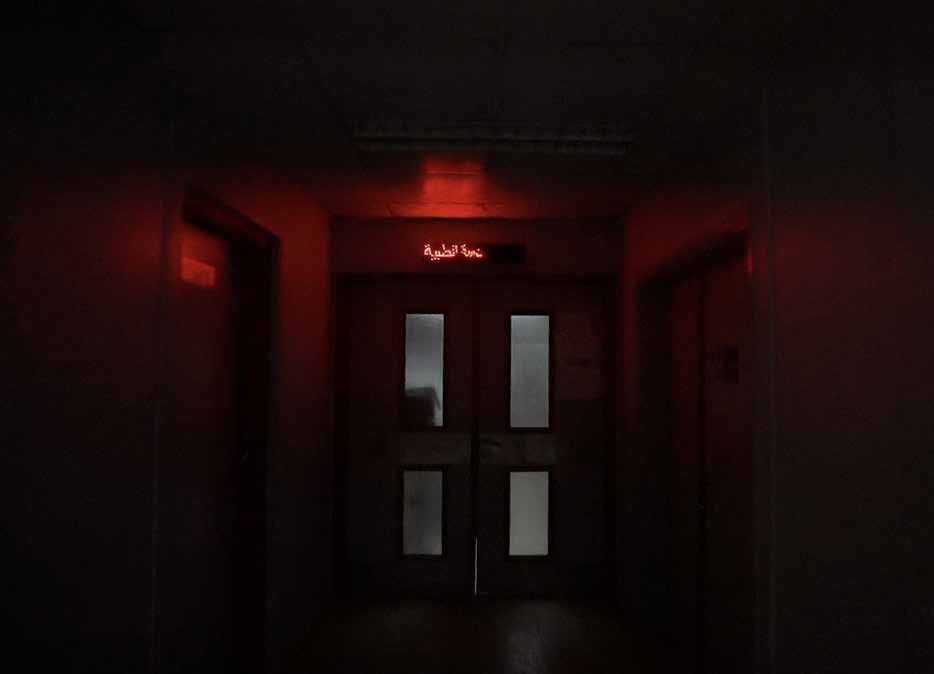
So, we’re talking about people with absolutely astonishing courage—all of them civilians. We didn’t see a single weapon. As an infectious disease specialist, I visited every corridor of the hospital. I went everywhere. And I can tell you that at the Mother-Child hospital in Rafah, the Emirati Hospital, or the European Hospital in Khan Yunis, there was nothing resembling the Israeli narrative. I think we would all do well to wait for independent verification of the Israeli narrative from the past six months because we know how powerful media warfare can be. It can happen on both sides. But in any case, what I can tell you is that we, the caregivers—17 of us who have been to Gaza in the last ten weeks and who are signing an op-ed—have not heard a single word of violence. We have not heard a single word of hate.
We have only heard citizens, mothers, fathers, children, saying, “We are human beings, we are not animals, as Netanyahu says. We want to live in peace with the Israelis. That is our... our main desire. And why do you treat us like this? Why do you kill us like this?”
They told us, the caregivers, “Go back home. It’s good to come and help us but go back so that the blockade can be lifted and we can also provide care regarding our own needs, and so that it becomes possible to stop these bombings, for which the hypocrisy and silence of your European and North American communities are ‘absolutely necessary’.”
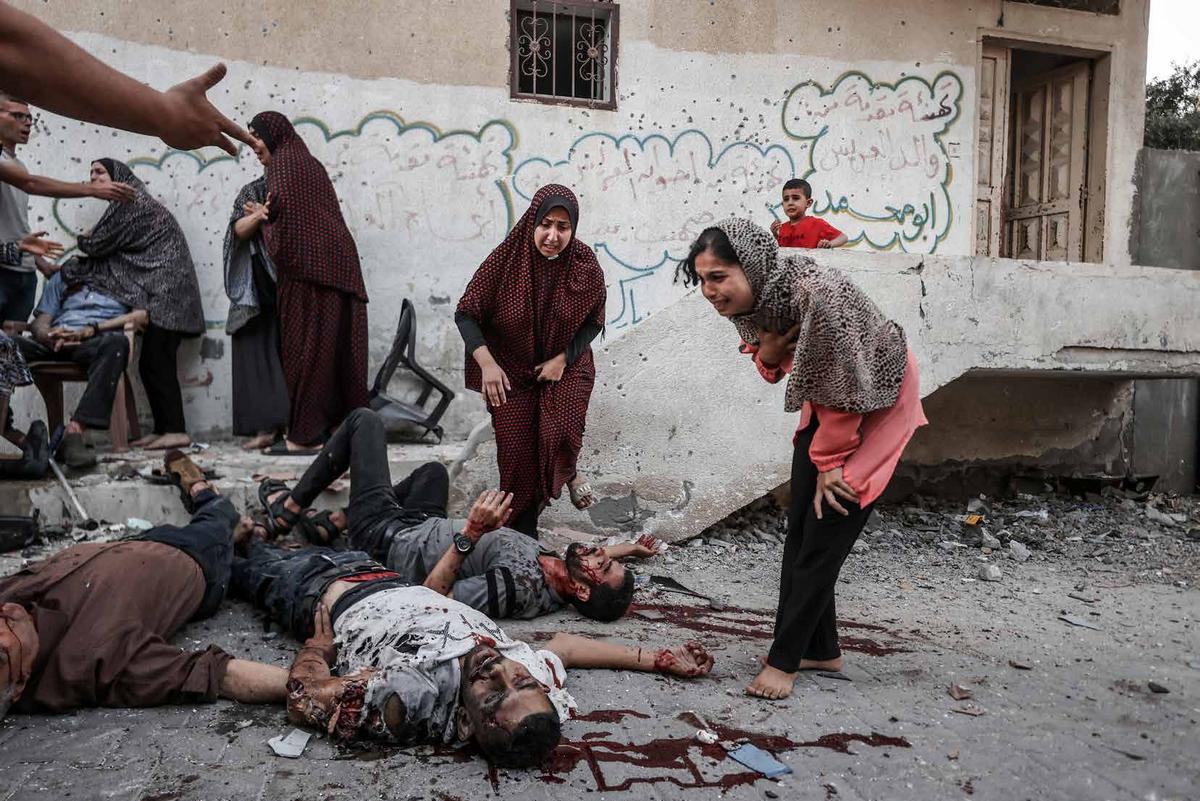
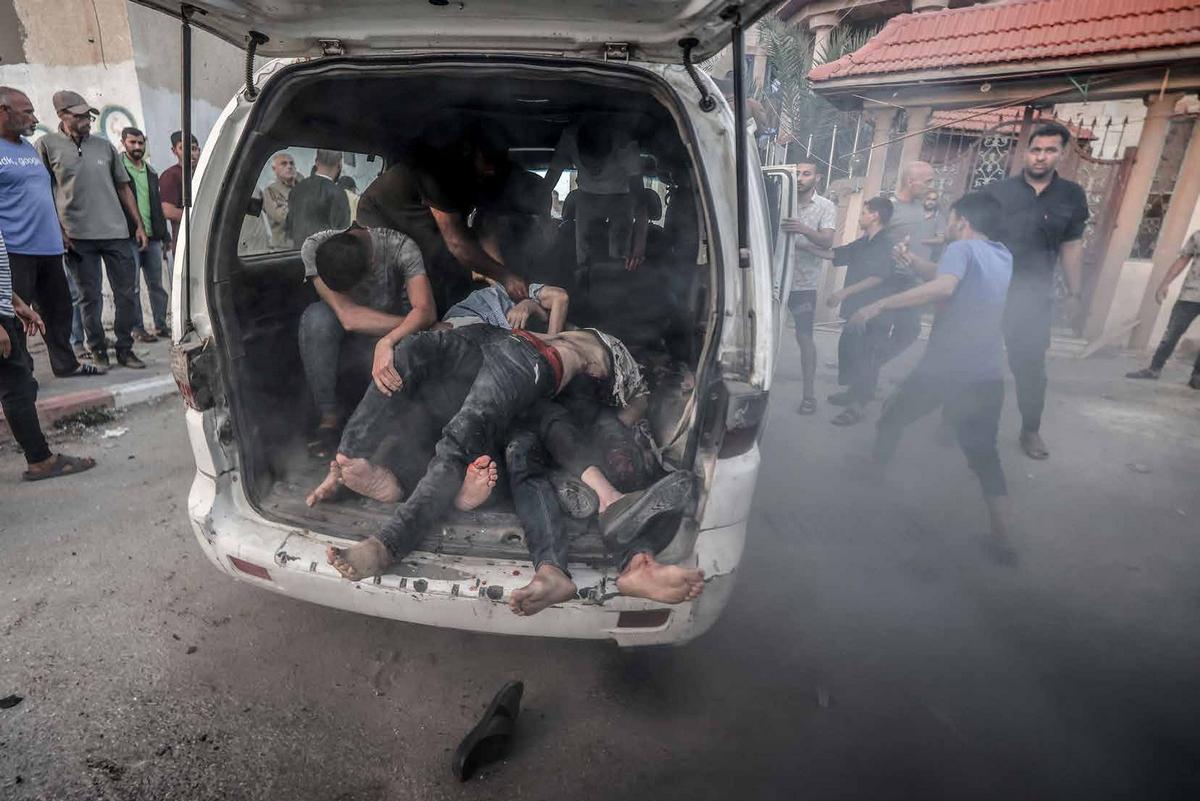
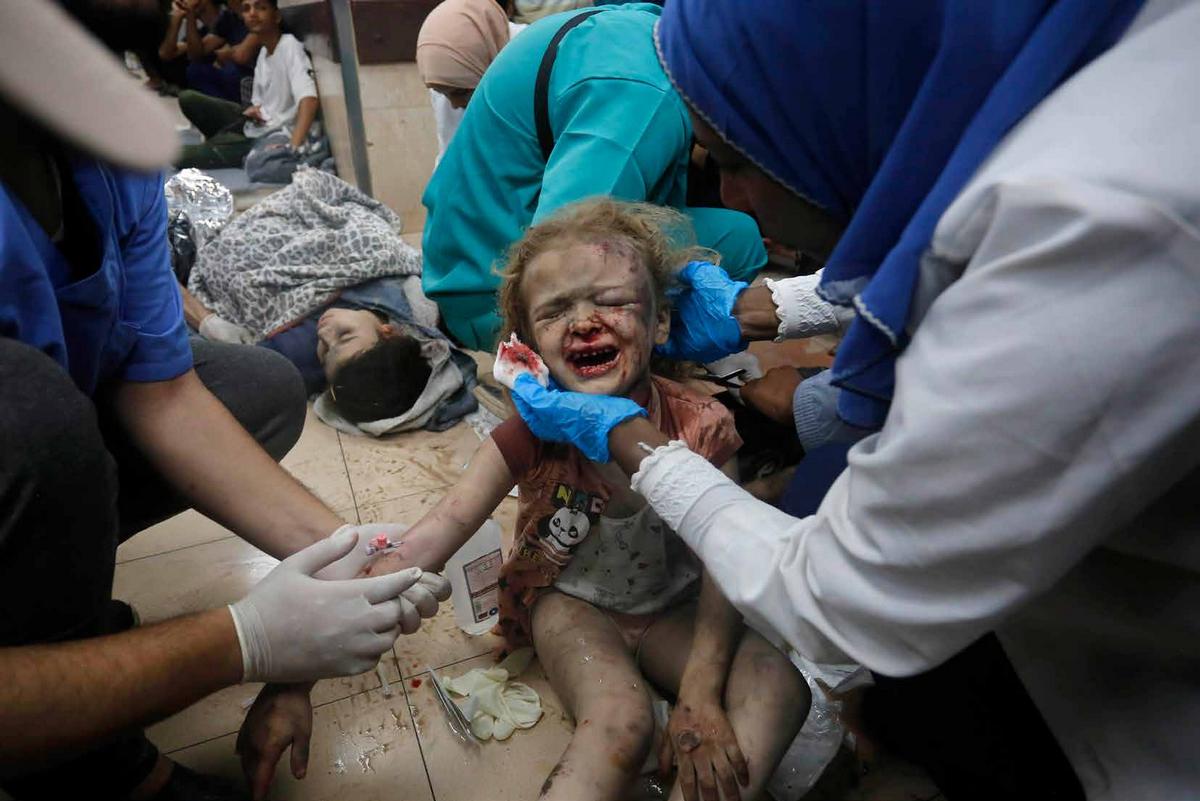
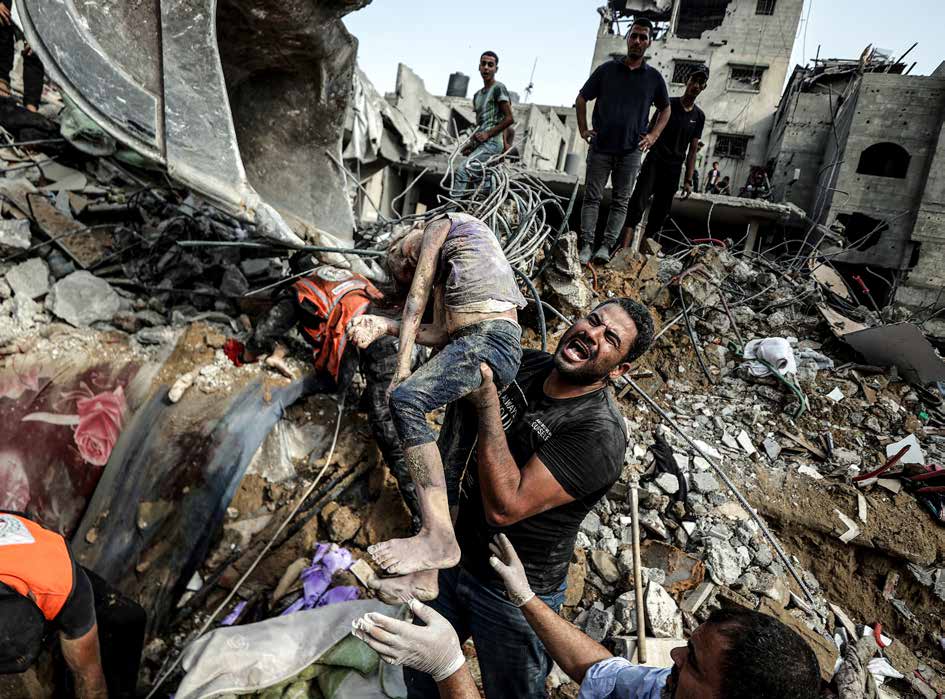
So, there it is. That’s what... That’s what… That’s what we saw. We saw absolutely horrific war injuries. I don’t have experience in war medicine, but my colleagues here, who have spent 10, 20, or 30 years in the United States, where there are still many war casualties, or on war fronts in the Middle East and elsewhere— and two very experienced French colleagues in war medicine, Professor Raphaël Pitti and Dr. Zouelana—had never seen anything like this.
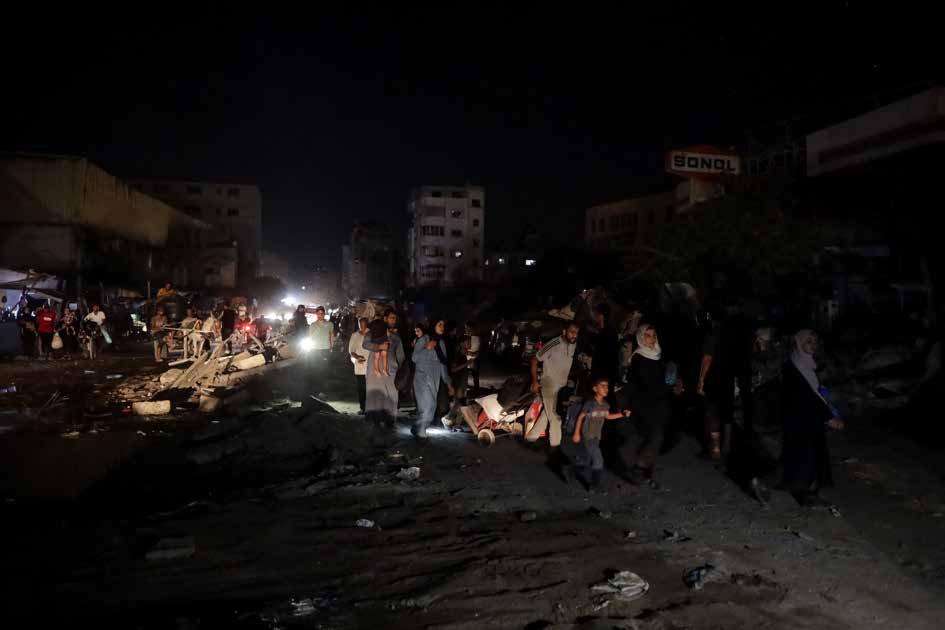
They had never seen a war zone where civilians were so heavily targeted, with no escape whatsoever. It’s like a trap closing in, with instructions telling people to “go take shelter.” Most of the testimonies we recorded—we have 3 hours and 30 minutes of audio and now 40 minutes of edited videos available to all media and the public—describe people who had to relocate, if you can even call it relocating; running in the middle of the night with nothing, at least five times, 4 to 5 times. Every time they were in a supposedly safe place, that place was bombed. They all lost family members, nearly all of them lost their homes, all their memories, and if you watch the videos we recorded or the ones they showed us from their own devices, it’s clear that it was done deliberately to destroy their roots, their memories, their culture, their spirituality.
Targeting mosques, universities, schools, healthcare workers, teachers, sacred sites, historical places—it was really an intentional effort to destroy.
So, as caregivers, we witnessed a clear genocidal intent, which was unmistakably evident on January 26. The evidence we gathered and brought back, though anonymous—because, of course, revealing the identities of those who spoke out would put their lives at immediate risk—supports this. This reality is now wellestablished, and as a healthcare provider, I deeply understand the suffering and trauma of the Israeli people, who have lived behind walls for years. It’s similar to what some have described in South Africa. I recall hearing on France Culture a few days ago, a story about a woman, an Afrikaner, who said:
“I was raised with a brainwashed fear of black people. And when Mandela was released from prison, it so happened that I was involved in politics and was appointed to his government. But I stayed locked in my office for three weeks, afraid to meet him in a position of power. Then one day, he knocked on my door, spoke to me in Afrikaans, asked about my family, and my heart melted.”
And when I heard that, I thought about the Israelis, who probably, like those I’ve met multiple times—in Tel Aviv, on the plane, or elsewhere—have this deeply ingrained fear of Palestinians, fear of terrorism, fear of Islam, so deeply rooted that this terrible trauma from October 7th… Attacking civilians is terrible, but unfortunately, attacking civilians didn’t start on October 7th. So (France’s third female rabbi) Delphine Horvilleur will correct me because I just said “but.”
So, and, all of this didn’t start on October 7th. Who talked about the 350 civilians who were killed between January 1st and October 7th? Who talks daily about the apartheid experienced in the West Bank, which I witnessed for just three weeks? Who talks about Israel’s non-compliance with international law? Who talks about the terrorist actions of a state today, which terrorizes a population to the point of trapping them in a snare, giving them no escape, destroying all their roots and hope? That is the definition of terrorism. Who talks about that?
What I see displayed on the 16th district town hall is in support of the people, against terrorism, and for the liberation of hostages, with the Israeli flag in front of the French town hall of the 16th arrondissement. What I see is that tomorrow, at 7 p.m., at the Human Rights Plaza at The Trocadéro (Paris), a demonstration in support of the Israeli army for the liberation of hostages has been authorized.
Yes, liberate the hostages, but liberate all the hostages, and liberate this people too, who have been held hostage in Gaza for over 17 years, and since, as you well know, since 1948, with the Nakba trauma, and all these people who are held hostage outside, all this diaspora that cannot return home, and all these people living in the West Bank and Gaza, who are not free in their thoughts, in their movements.
So, let’s break out of our enclosures, and if we really want to fight against all extremes, whether in Israel, in France or elsewhere, whether it pertains to Hamas. But let’s speak the truth, let’s break out of this closure that is still today displayed by the French government, as we saw 48 hours ago, with another government official seriously reflecting on something in the realm of “Let’s dare to meet and dare to make peace together.” Building walls doesn’t bring peace; recognizing the need, the desire for security, and the suffering of each person, and applying international law, will lead us out of this.
So indeed, the (French) president and his wife are among the recipients of the editorial we just wrote with the 17 French caregivers who have just returned from Gaza, supported by many other caregivers. But it’s not just them (the president and his wife); there are politicians—right-wing politicians, centrist politicians— who have never met with us, who don’t listen to our narrative, which is an ethical, balanced narrative based on evidence, not favoring one side over the other. Just because I participate in certain demonstrations in favor of applying international law in Palestine or elsewhere doesn’t mean I support one cause over another. No, I am a doctor; I’m here to care for everyone, and I’m here to say, as a doctor, that it’s simply impossible to provide care when bombings and terror are present. And so, when bombings and terror are present because we’re locked in here in France at the highest political levels, as we confirmed 48 hours ago in a speech where supposedly the wrong is targeted, and the systemic approach points to the wrong object without ever questioning itself or critically analyzing the narratives offered to it—we saw it again in France with the events at Sciences Po where Palestinian women were attacked—this really raises concerns about the future of democracy.
So, the responsibility of politicians and the media is clear, because the national media are closed—except in Marseille, where we had access to some national media. Frankly, the discourse is shut down because people are afraid, afraid of a discourse maintained by the executive and legislative branches today around the confusion between anti-Zionism and anti-Semitism and around this fear of endorsing terrorism. But let’s be aware, let’s each be aware—we know what’s happening—that maintaining a regime of terror over an unarmed civilian population in a snare is called terrorism. And according to international law—it’s not my field, but from what international jurists tell me—when one is colonized due to noncompliance with international law, one has the right to defend oneself. And today, not far from here, at the Invalides and the Pantheon, we celebrate resistants who were labeled “terrorists” at the time—let’s question ourselves. And above all, let’s not be so divided among the French, among French people of different faiths or seculars. If our desire is to be safe, let’s have one common goal: to fight against extremism. That’s our common goal.