
How does it feel to both witness and be personally involved in the ongoing events, facing the imminent danger of death while working?
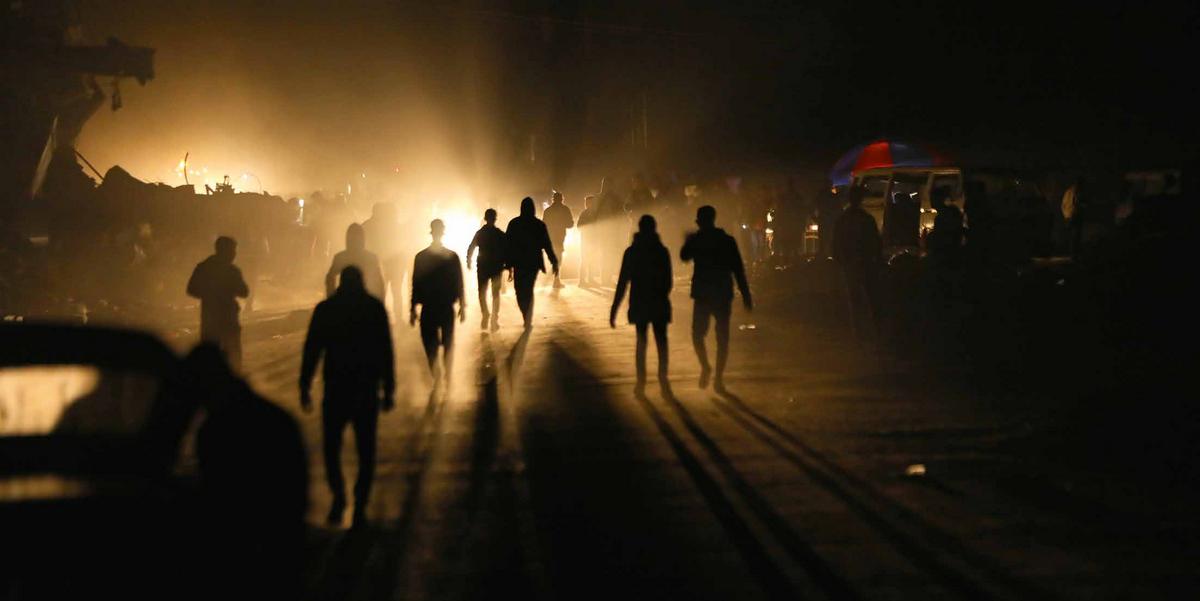
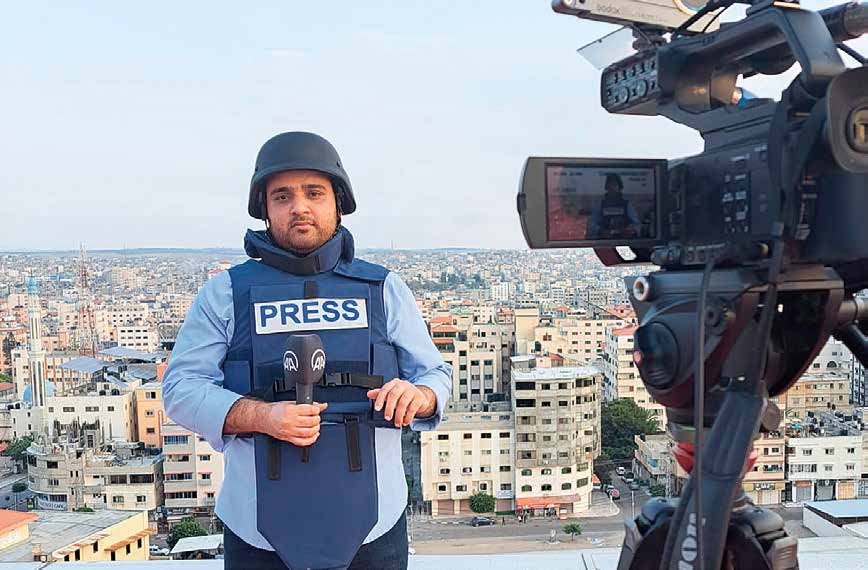
I closely monitored Israel’s attacks on the Gaza Strip for 60 days, navigating through various emotions and moods. We oscillated between states of fear and a deep sense of responsibility. There were moments of joy after conveying an impactful photo that would support our people’s cause, but concurrently, feelings of responsibility and anxiety for our families persisted. Most of the time, our concerns were not for ourselves but for our families and children. During reporting and filming, we couldn’t be with our families, and our meetings were limited to just a few hours. The sounds of planes and missiles filled the air, making it difficult for children to sleep. On one occasion, when I called my wife, I asked to hear the children’s breathing, expressing how much I missed that sound. Unfortunately, right at that moment, the connection was lost, and I couldn’t hear anything.
You have to control such emotions and persevere in work. If you lose hope and surrender, you will not be able to work effectively or convey your message. I was in charge of a sizable team, and although Montaser al-Sawwaf was primarily a photojournalist, I regarded him as the person who managed the office. Whenever we encountered any problems, a simple call of “Montaser!” was all it took, and he was always there, responding with, “Here I am! I’m ready.”
What was the late Montaser like?
Montaser was always the one with solutions to problems. He had a wide network of contacts and knowledge of various methods to address our needs. I never felt a sense of helplessness when Montaser was around [crying]. He was everything. But we could never afford the luxury of letting ourselves go psychologically. We had to persist in our work to convey the message of our people.
Was there a moment when you couldn’t continue recording as a journalist?
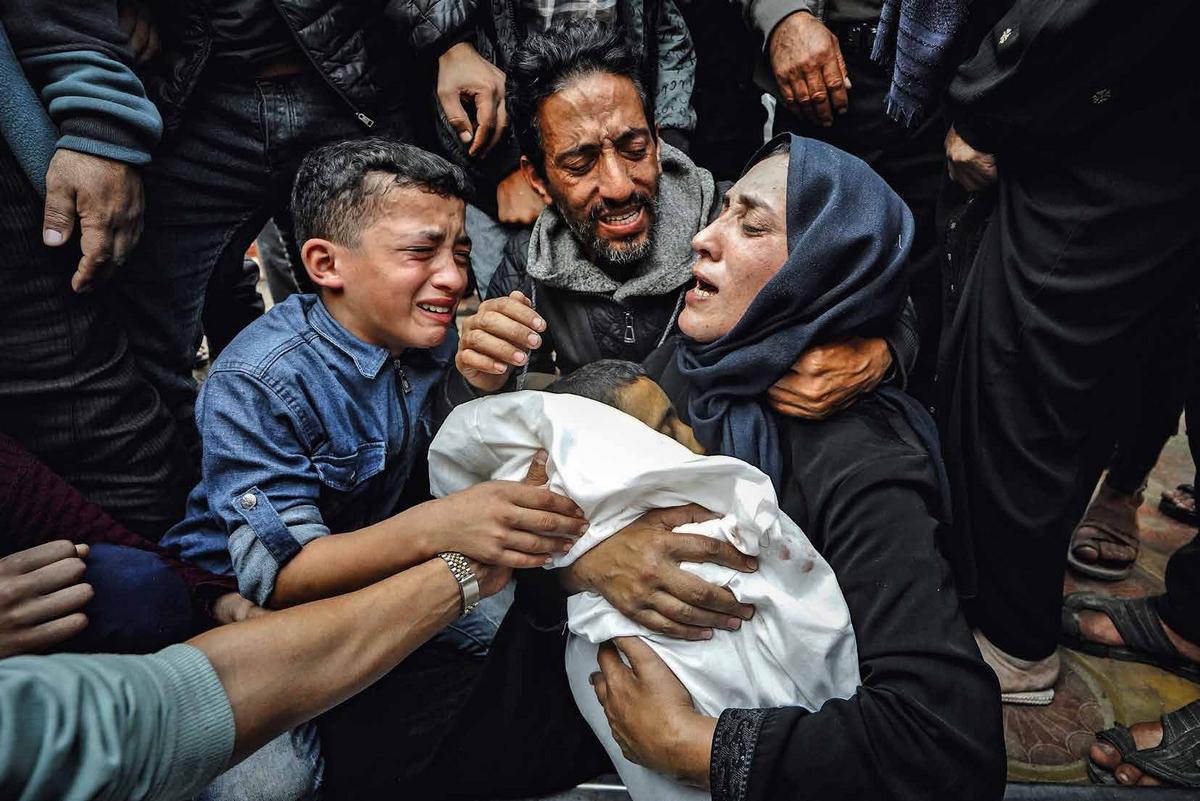
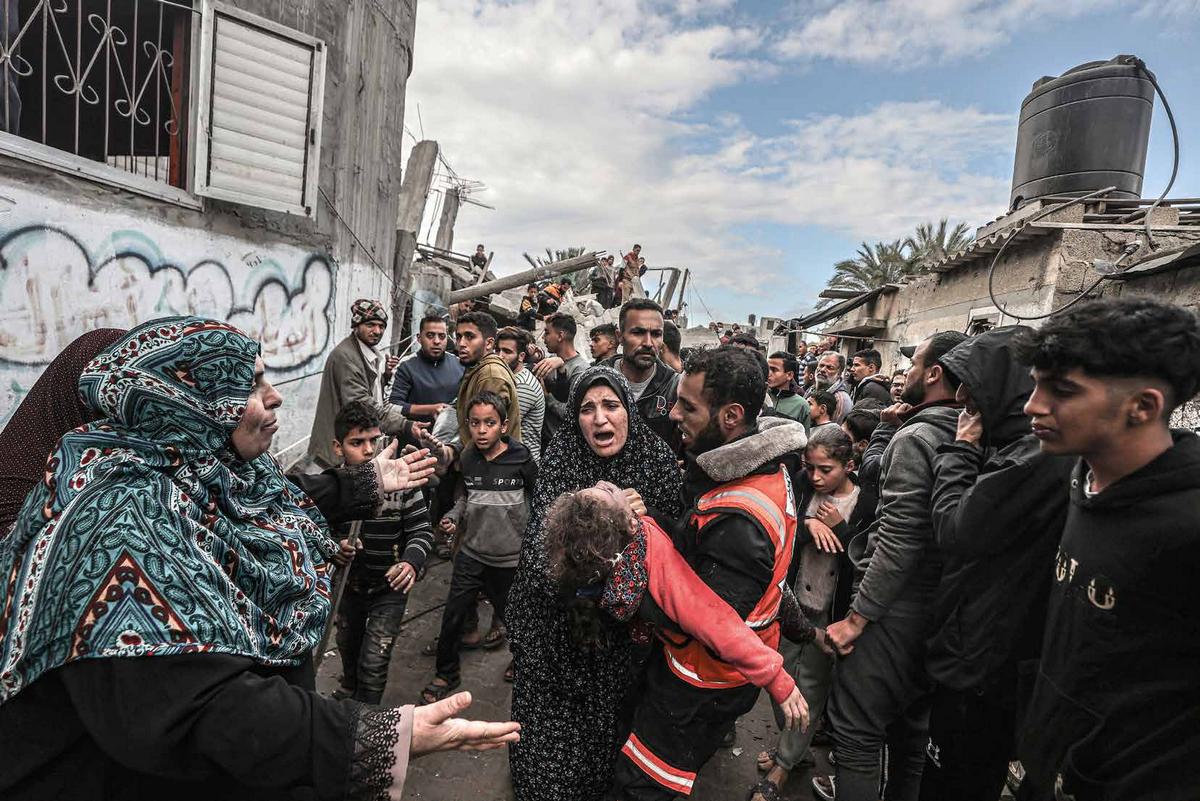
We suffered the loss of 40 members of our family in a single day. That smell (the smell of gunpowder) always had a profound impact on us, causing us to anticipate more martyrs. On that particular day, an explosion occurred close to where we were, and we reported that the bodies in the site of explosion were burning. However, what made this particular explosion different from others was that all the victims turned out to be sons of my uncles— relatives I had grown up with. I kept coming across the lifeless bodies of my relatives and their children. I managed to capture several photos with my cell phone, but I couldn’t continue. That was the only time I couldn’t complete the shoot.