In mid-November 2024, the United States imposed sanctions on Amana, a major Israeli settler organization involved in the financing and construction of illegal settlements in the occupied West Bank and East Jerusalem. American sanctions were also directed at several other settler organizations involved in settlement expansion, along with a small number of named settlers who are alleged to have been involved in attacks on Palestinians.
This followed earlier sanctions by the Biden Administration in February, June and August directed at a handful of violent Israeli settlers. Other countries and regional organizations, including the European Union, Canada and the United Kingdom, have also recently imposed sanctions against settlement organizations and violent settlers.
Are these sanctions - which freeze any assets these organizations or individuals might have in these countries and domestic companies and individuals from doing business with them - an effective tool to curb violent settlers and settlement growth, or are they simply diplomatic theatre, a distraction from imposing truly game-changing accountability measures on Israel?
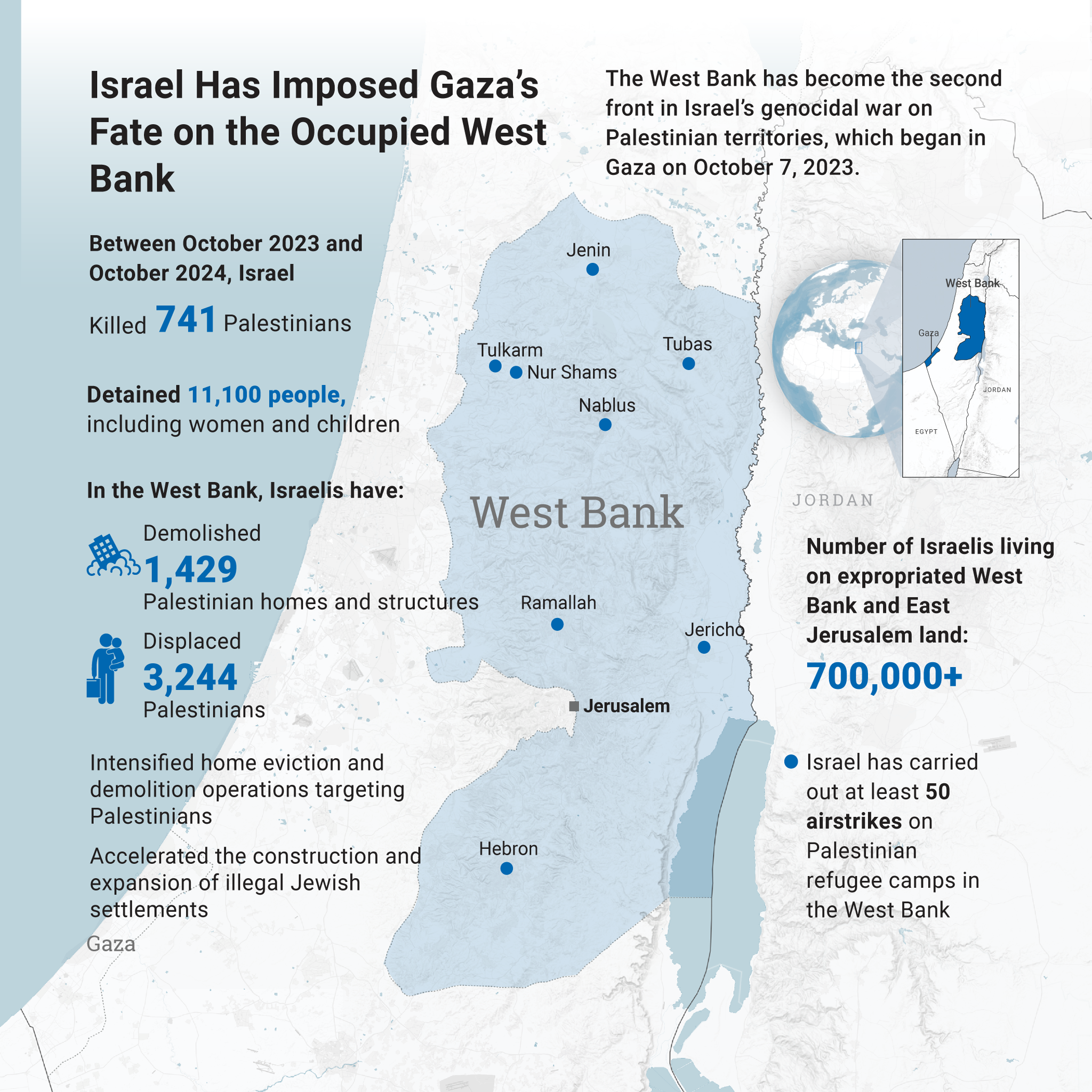
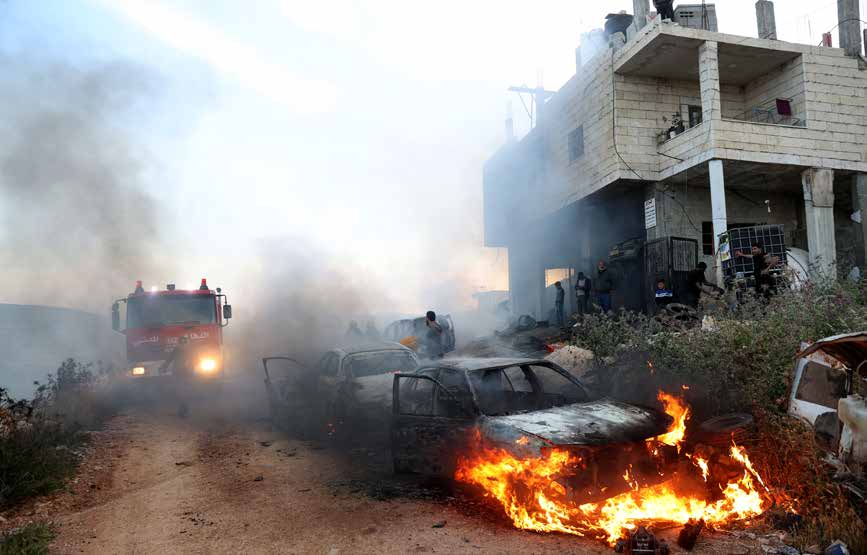
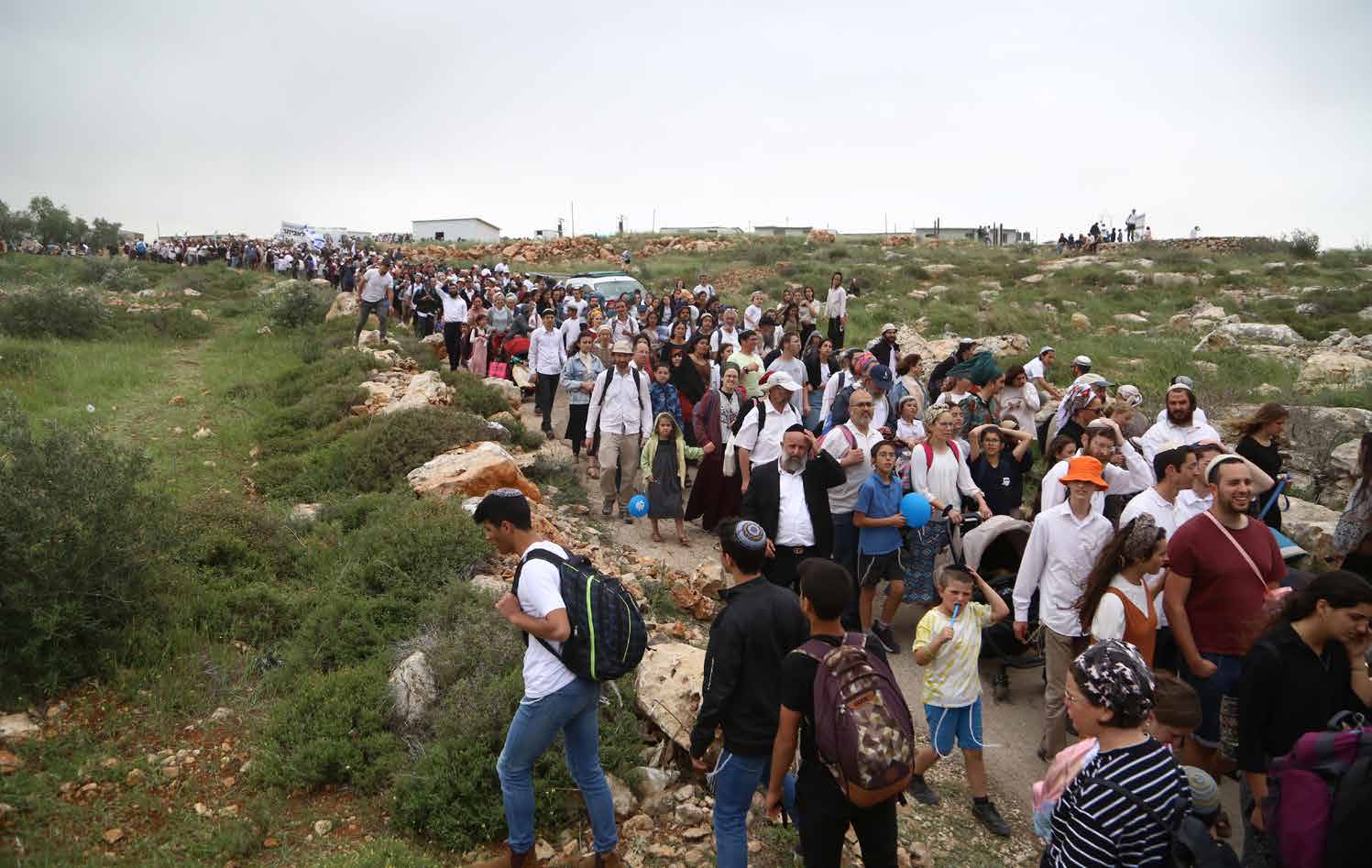
There is little evidence that these sanctions have imposed any significant behavior change by the Israeli government or the Israeli settlement movement. In the year since the Israeli military assault began on Gaza after the Hamas attacks on 7 October 2023, there have been more than 1,400 recorded settler attacks on Palestinians in the West Bank, the highest degree of violence there since the second intifada. This is occurring with the tacit and even active support of the far-right government in Israel amidst the deepening of the Israeli settlement enterprise, with more than 730,000 settlers in the West Bank and East Jerusalem. And as the settlements have grown and the violence has increased, so has the impunity.
In July 2024, the International Court of Justice issued an advisory opinion which held that the Israeli occupation on the Palestinian territory was unlawful and must end “as rapidly as possible.” Regarding the settlements, the ICJ stated that: “…the Israeli settlements in the West Bank and East Jerusalem, and the régime associated with them, have been established and are being maintained in violation of international law.” It then opined that Israel is required to “cease immediately all new settlement activities and to evacuate all settlers from the Occupied Palestinian Territory.”
Two months later, the United Nations General Assembly overwhelmingly (124-14-43) adopted a resolution which welcomed the advisory opinion and demanded that Israel completely end its unlawful occupation by mid-September 2025. Respecting the settlements, the UNGA specifically directed all UN members to take a number of steps to isolate the settlements, including:
• Abstaining from treaty relations with Israel in all cases where it purports to act on behalf of the Occupied Palestinian Territory (OPT);
• Abstaining from entering into economic or trade dealings with Israel concerning the OPT…which may entrench its unlawful presence in the OPT, including with regard to the settlements and their associated regime;
• Taking steps to prevent trade or investment relations that assist in the maintenance of Israel’s illegal situation in the OPT, including with regard to the settlements;
• Taking steps to ensure that their nationals, and companies and entities under their jurisdiction do not support the settlements in any way, or provide aid or assistance in maintaining Israel’s illegal presence in the OPT;
• Taking steps to end the importation of any products originating in the Israeli settlements, as well as the provision or transfer of arms, munitions and related equipment to Israel where there may be reasonable grounds to suspect that they may be used in the OPT;
• Implementing sanctions, including travel bans and asset freezes, against natural and legal persons engaged in the maintenance of Israel’s unlawful presence in the OPT, including in relations to settler violence.
In international law, there is a wall-to-wall global opinion that the Israeli settlements are profoundly illegal. This is the position of the United Nations Security Council, the UN Secretary General, the UN High Commissioner for Human Rights, the UN Human Rights Council, the High Contracting Parties to the Fourth Geneva Convention, the European Union, Amnesty International, the International Committee of the Red Cross, Human Rights Watch, Al-Haq and B’Tselem.
More recently, the Israeli settlements have been understood as also constituting a war crime, among the most serious of human rights and humanitarian law violations. In my March 2021 report when I served as United Nations Special Rapporteur for Human Rights in the Occupied Palestinian Territory, I observed that, under the 1998 Rome Statute of the International Criminal Court (which many countries have enacted into their domestic legislation), the creation of civilian settlements by an occupying power in occupied territory is a war crime. Article 8, 2-b (viii) of the Statute states that:
“…war crime means: the transfer, directly or indirectly, by the Occupying Power of parts of its own civilian population into the territory it occupies…”
I concluded my 2021 report by noting that:
“…the Israeli settlements are the engine of this forever occupation, and amount to a war crime. An occupying power that initiates and expands civilian settlements in defiance of international law and the Rome Statute cannot be serious about peace. Equally, an international community that does not impose accountability measures on a defiant occupying power acting contrary to international law cannot be serious about its own laws.”
Short of implementing the full range of sanctions against the Israeli government and its settlement enterprise laid out in the September 2024 resolution by the United Nations General
Assembly, the measures announced by countries in the Global North against the very worst of Israeli settlers and a handful of settler organizations will accomplish nothing in stemming the dynamic growth of the settlements. Instead, the primary focus of sanctions must be on the Israeli political leadership itself, whose planning, financing, legal administration, encouragement, security and promotion of the settlements is indispensable to their existence and success. Anything less is eyewash.