
A mother’s grief: Searching for a lost son
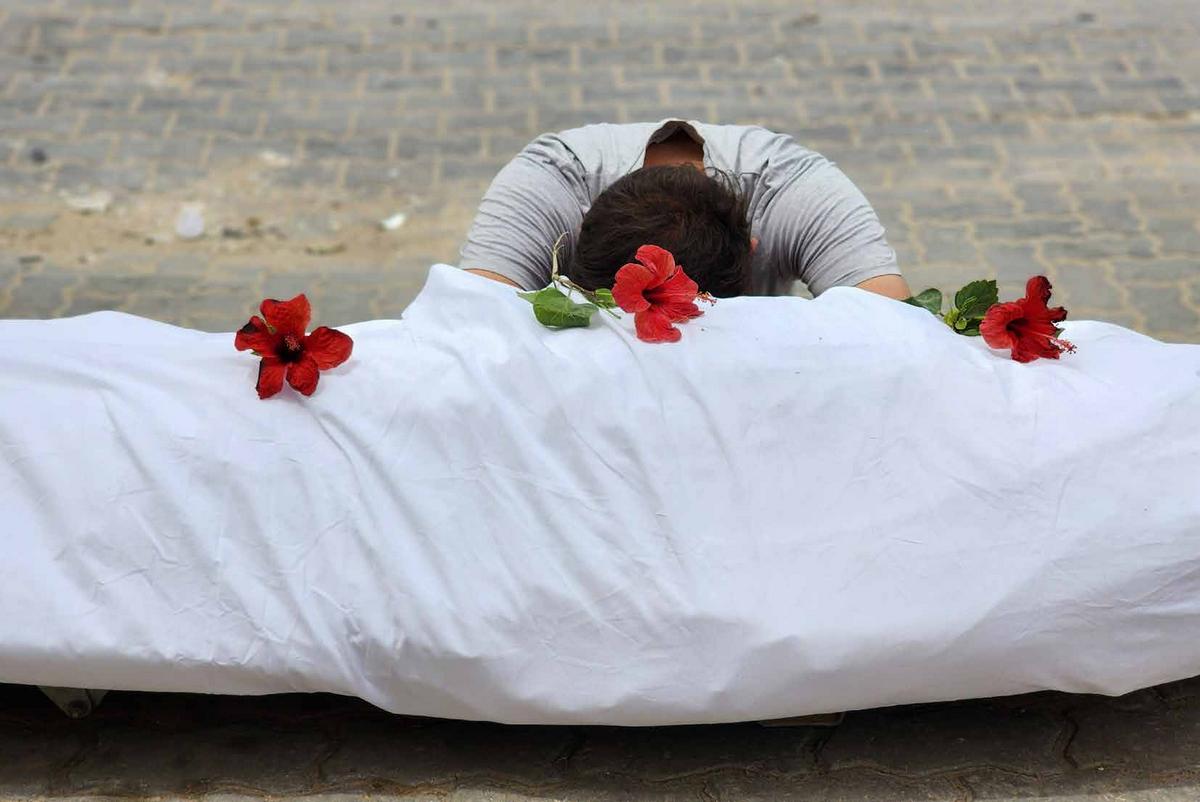
“I lost my son, Nabil Mohammed Zadan, in the Israeli attack on January 22. I’m here to find his body. I’ve been looking for his body for three months now.
My son was a fourth-year law student at university, an educated and cultured young man. I have been searching for him for three months. I haven’t had a single night of sleep; I’ve shed countless tears. I’ve reached out to the Red Cross, civil defense, the Ministry of Health—everywhere. I even lifted the covers off the martyrs I saw in the streets, hoping one might be my son.
When Iran attacked Israel with drones, the Arab nations were concerned about Israel’s safety. But what about our children? Why doesn’t anyone care about them? I’m a mother, and my heart is burning—please see and hear my pain.”
Abdullah Abu Mustafa: “They drew smileys on the bodies to provoke the Palestinian people”
“I buried my daughter, my cousin, his wife, and their daughter on January 22.
When the Israeli army entered the city, they blocked the road to the Khan Yunis cemetery. So, we buried the bodies at the Al-Nasser Hospital instead.
During Ramadan, people communicated with each other, planning to move the bodies from these temporary graves to a proper cemetery. But when we arrived, we found that Israel had exhumed nearly 1,000 martyrs we had buried. They had changed their clothes, and we saw the Star of David on the martyrs’ garments. They went so far as to draw smileys on the bodies to provoke the Palestinian people.
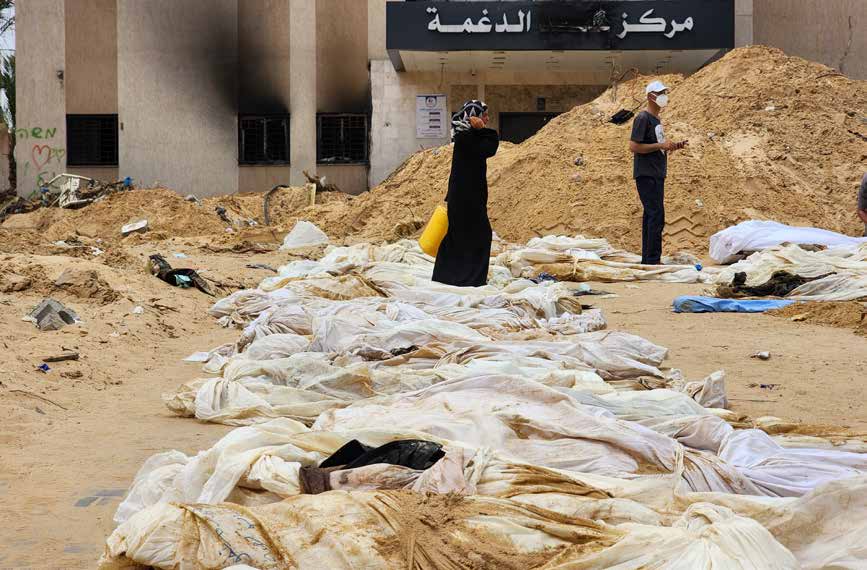
We discovered mass graves, each containing at least 30 to 40 bodies. People tried to identify their loved ones by their clothes, but because the clothes had been removed, we couldn’t identify around 70% of the bodies. We also found some bodies buried head down and feet up, and four or five bodies stacked on top of each other.”
Raid Raid Sakr: “We’ve been working for three days, recovering around 150 martyrs”
“When people couldn’t find their loved ones where they had buried them, they informed the civil defense unit.
The civil defense teams immediately came to the area and started locating the bodies using simple equipment. We discovered that Israel had created a mass grave. We received reports that hundreds of martyrs were buried there—some say 300 to 400. We’ve been working for three days, and during this time, we’ve recovered around 150 bodies. Many remain unidentified. The bodies that could be identified were taken by relatives for burial; the unidentified ones were buried by civil defense teams.”
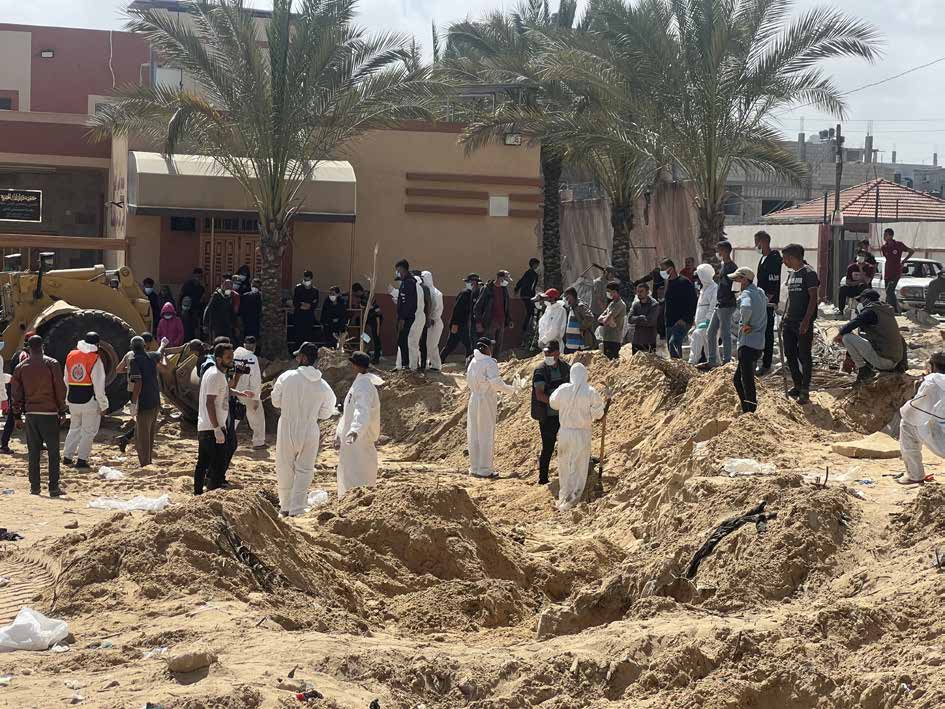
Ismail al-Thawabta, Director General of the Media Office in Gaza: “Decayed bodies without heads or skin were found”
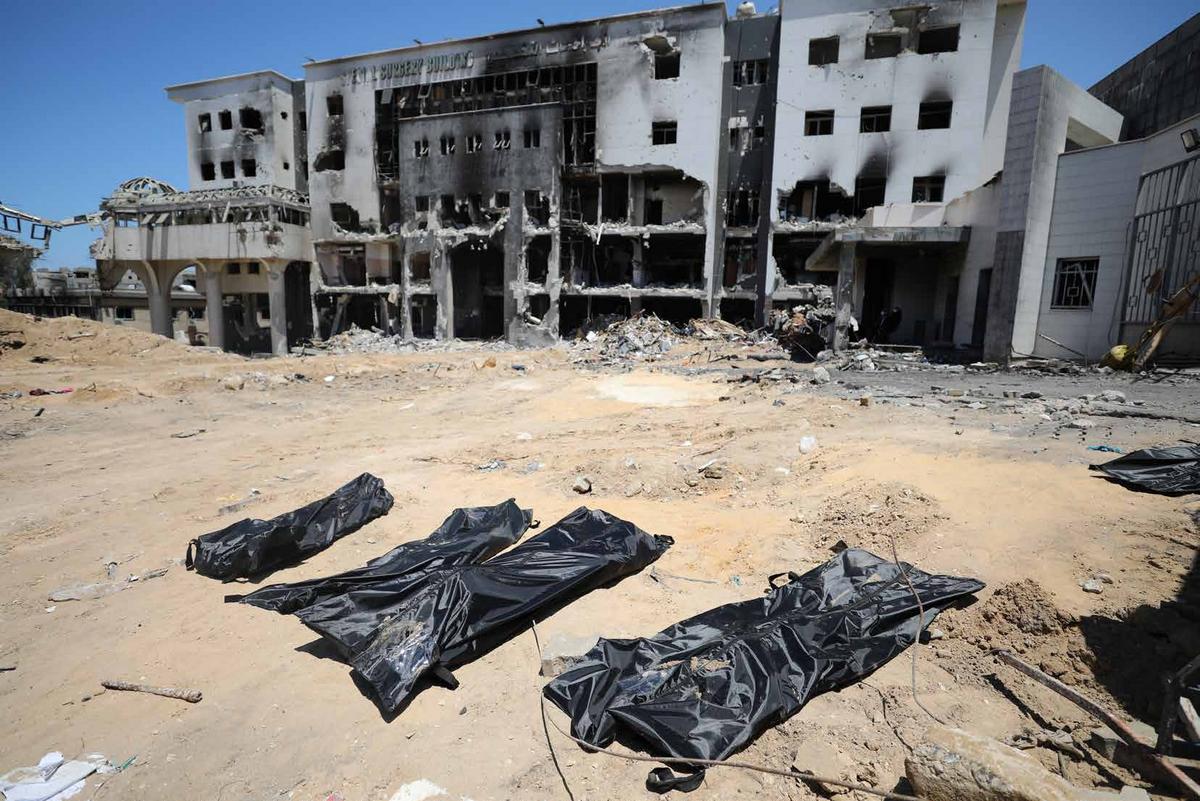
“We found two mass graves at the Al-Nasser Hospital and recovered 150 bodies.
Since the Israeli soldiers withdrew from the Al-Nasser Hospital, 700 people have been reported missing. We believe Israel executed and buried hundreds of martyrs in mass graves.
What happened at the Al-Nasser Hospital also occurred at the Al-Shifa Hospital in Gaza City and previously at the Kamal Adwan Hospital.
Israeli soldiers exhumed hundreds of martyrs and reburied them in mass graves within the hospital complex. However, government teams are working tirelessly to expose this crime and identify the bodies.
We found numerous completely decayed bodies—some without skin or heads, and others incomplete. This is a massacre, a crime of revenge and savage war by Israel against civilians, children, and the displaced.”