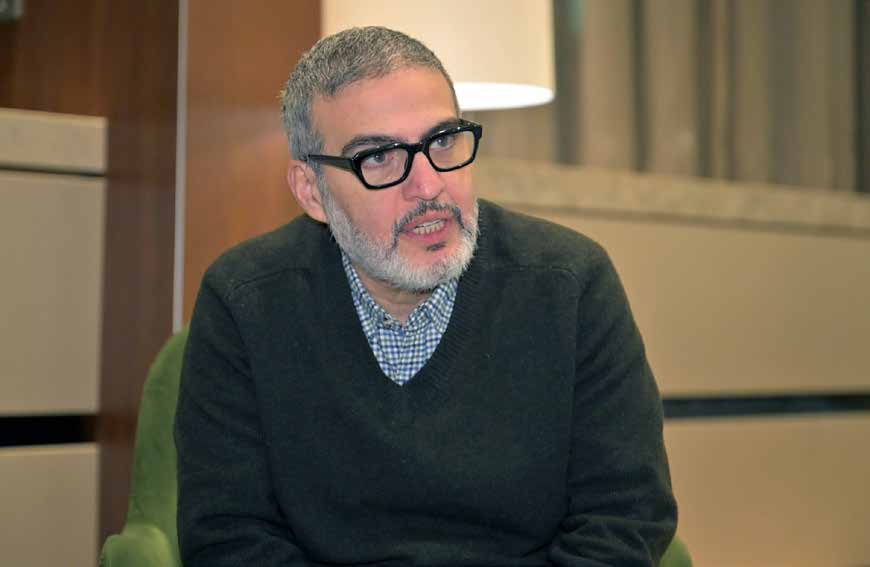

Dr. Ghassan Abu-Sitta, a UK-based plastic and reconstructive surgeon, spoke to Anadolu Agency (AA) in The Hague, where he was following the legal proceedings at the International Criminal Court (ICC) and the International Court of Justice (ICJ). He entered Gaza on October 9, 2023, via Egypt with the assistance of Doctors Without Borders (Médecins Sans Frontières) after Israel’s assault began, and remained there until November 18. Despite the crippling lack of medical resources, he worked tirelessly to serve the people of Gaza at al-Shifa and al-Ahli Baptist hospitals.
In the interview, he shared his experiences in Gaza—describing the state of the hospitals, the medical challenges they faced, and the story behind his conversation with AA cameraman Montaser al-Sawwaf, recorded just days before the journalist was killed in an Israeli airstrike. The interview was never released.
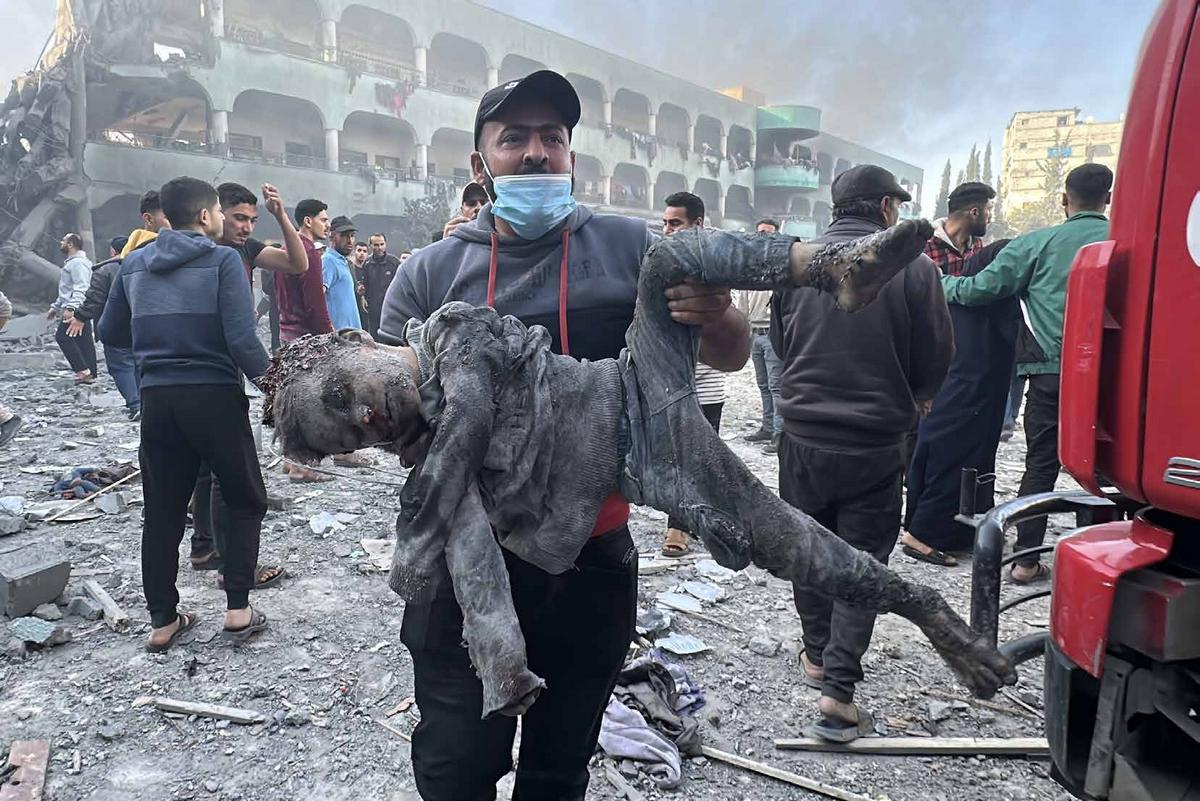
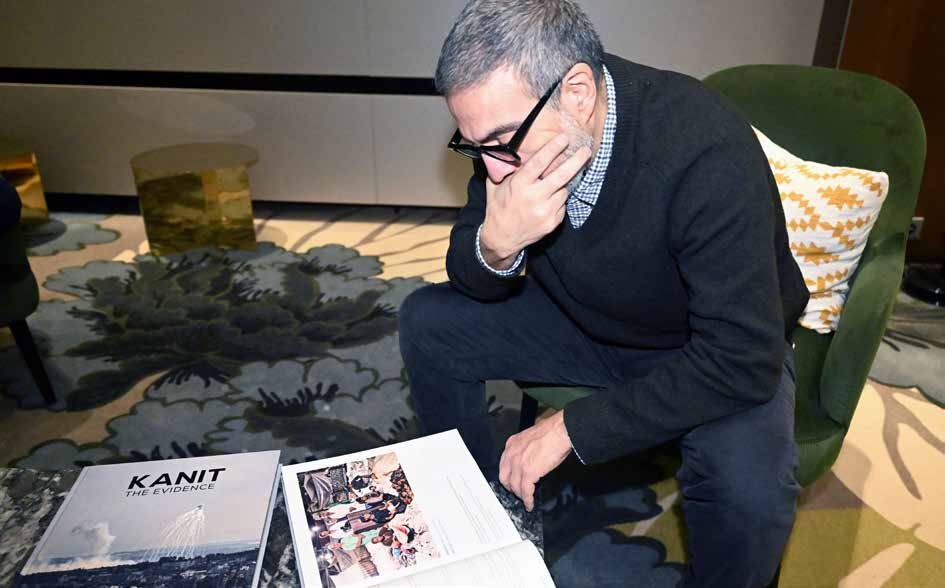
(About the photograph on the first page of KANIT [The Evidence], showing him speaking to the press amid the bodies of children at al-Ahli Baptist Hospital on the night it was bombed) This photograph was taken on the night of the al-Ahli Baptist massacre. I had arrived at the scene with one of the wounded. Many families had sought refuge in the hospital. Around 6 p.m., a missile struck the area where they were sheltering, killing nearly 480 people.
Immediately after the massacre, we did our best to save the wounded at the hospital before transferring them to al-Shifa Hospital.
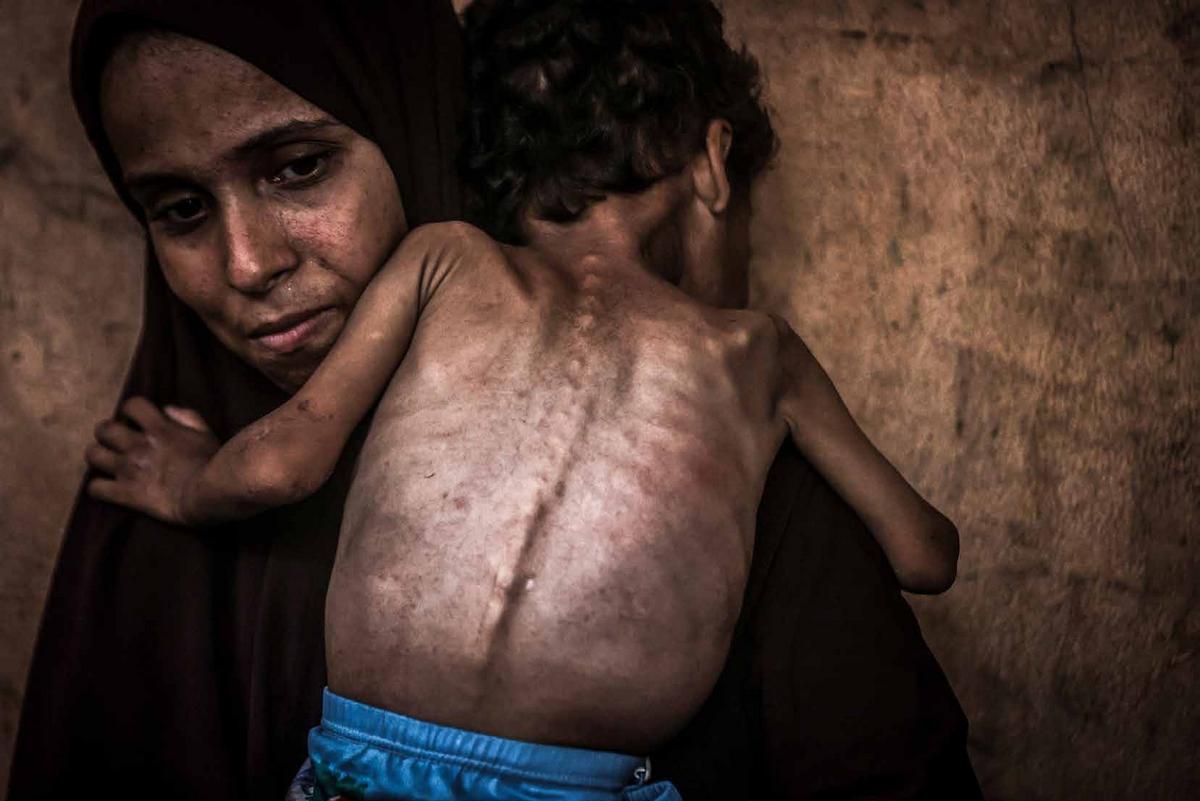
Israeli politicians and military leaders have openly stated their intention to make Gaza uninhabitable—to empty it of its people. One of the most effective ways to make a place uninhabitable—just as Israel has done in the Gaza Strip—is to destroy its healthcare system.
Since the beginning of the war in Gaza, there had been severe shortages of vital medical supplies. Eventually, we ran out of morphine and anesthesia used to ease patients’ pain during surgery. Because we couldn’t operate on many patients as often as required, most of their wounds became infected. The only way to keep them from dying of infection was to perform painful cleaning procedures without anesthesia.
Because of the constant influx of wounded people, it was extremely difficult—if not impossible—to take the same patient back into surgery, especially those who required multiple operations. This was because the number of patients needing surgery far exceeded the available operating capacity. As we tried to perform as many surgeries as possible, we prioritized the most urgent cases and postponed the others.
Working conditions became unbearable as hospitals were bombed and evacuated. The wounded were constantly being moved from one hospital to another, and I too had to move between them—making it impossible to keep track of the patients.
“al-Sawwaf was such a brave young man”
AA cameraman Montaser al-Sawwaf interviewed me in Gaza shortly before he was killed in an Israeli airstrike, but the interview was never published. The interview focused on the conditions at the hospital. Despite the threat of renewed attacks following the Israeli strike on al-Ahli Baptist Hospital, al-Sawwaf filmed the wounded and the devastation around him. He was an exceptionally brave young man.
After al-Shifa Hospital fell and al-Ahli Baptist became the only functioning hospital in Gaza, we were struggling to treat around 500 wounded patients. For several days, we were completely cut off from the outside world. Al-Sawwaf came to see us and interviewed me and a fellow surgeon. I was deeply moved by his courage.
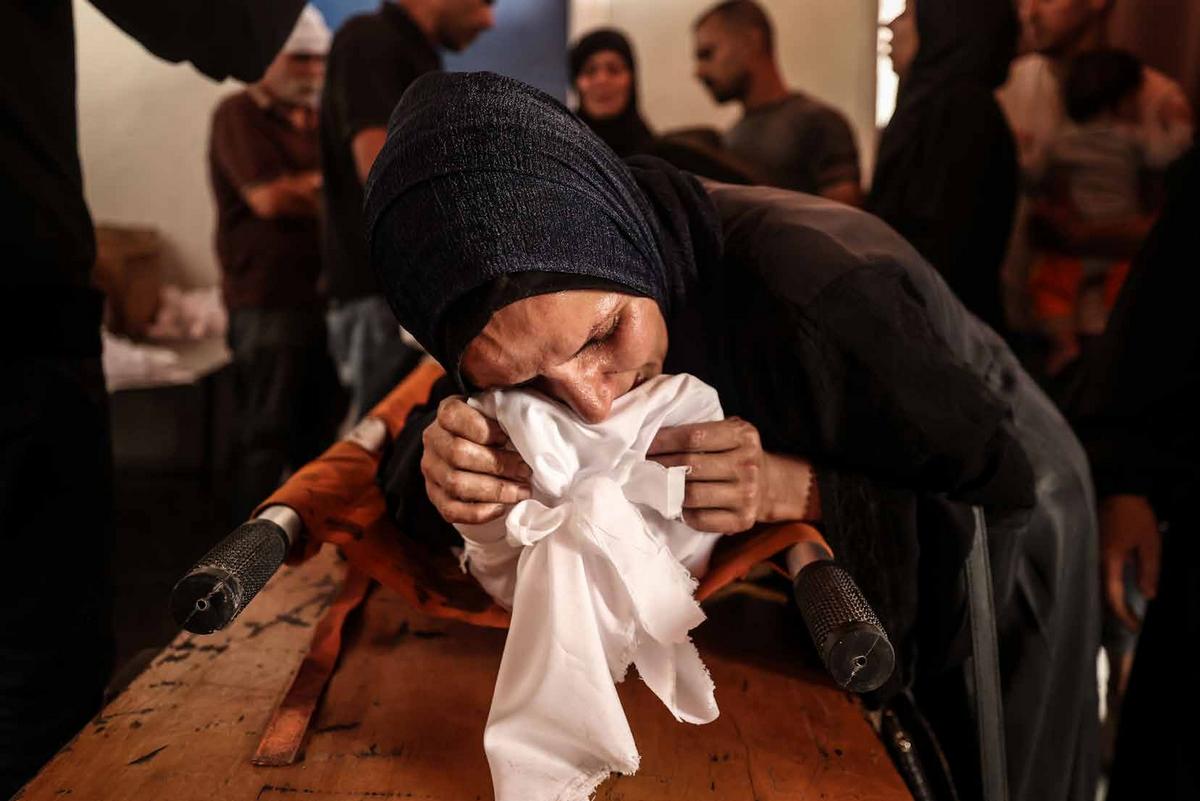
It was devastating to hear that people I had met and worked with in Gaza had been killed. After I left Gaza, I sadly learned that a colleague—a nurse in the burn unit at al-Shifa Hospital—had been killed along with her brother. A few days later, we learned that Dr. Haytham Abu Hani, the head of the emergency department at al-Shifa Hospital, had been killed along with his wife and children. Every three days you hear that another colleague has been wounded or killed by Israeli forces. During this war, more than 300 doctors and nurses have been killed.
“I performed 10 to 12 operations every day”
As a parent, caring for all these wounded children was psychologically overwhelming. I performed 10 to 12 operations a day, often finishing around 1 a.m.
When the anesthesia supplies at al-Ahli Baptist Hospital were exhausted, we decided to leave Gaza. If it had been up to me, I would not have left. You feel such a deep sense of responsibility toward your colleagues and patients that you simply cannot leave them behind.
My time in Gaza was a profoundly life-changing experience. After everything that happened, it takes time to make sense of it all—to heal from the trauma and to rebuild yourself in order to rediscover who you are.