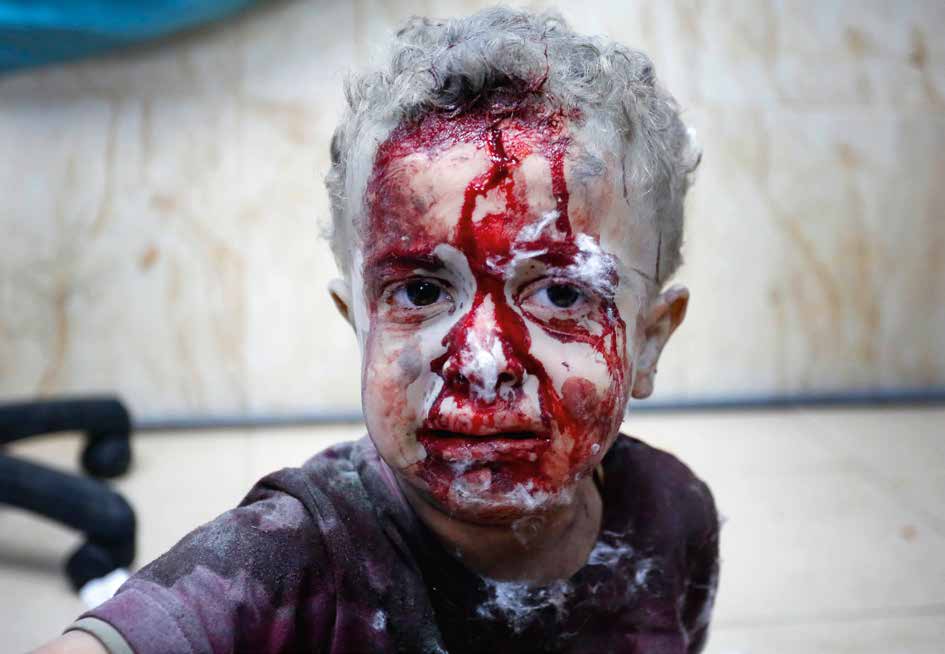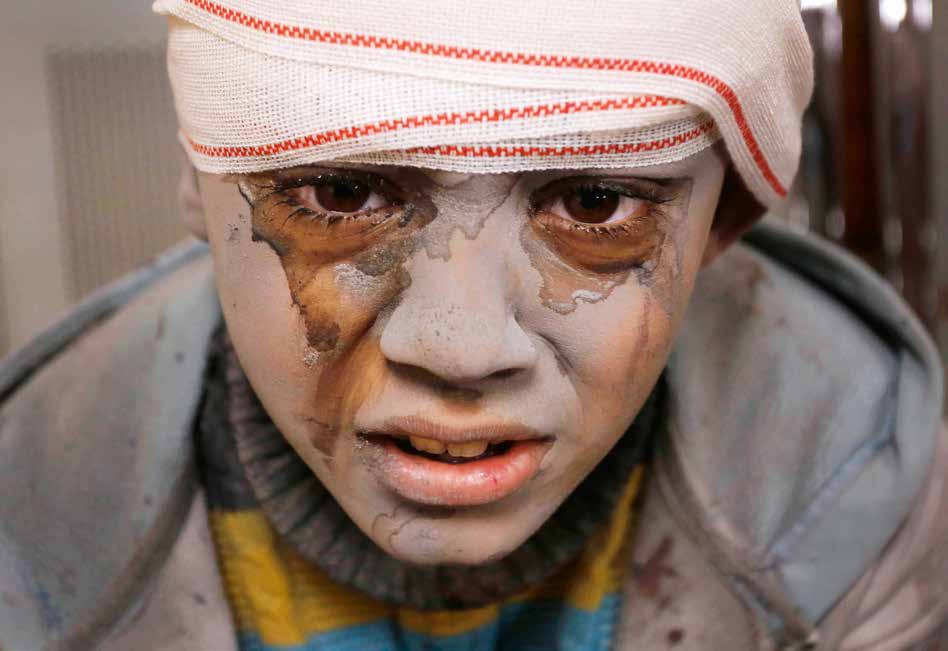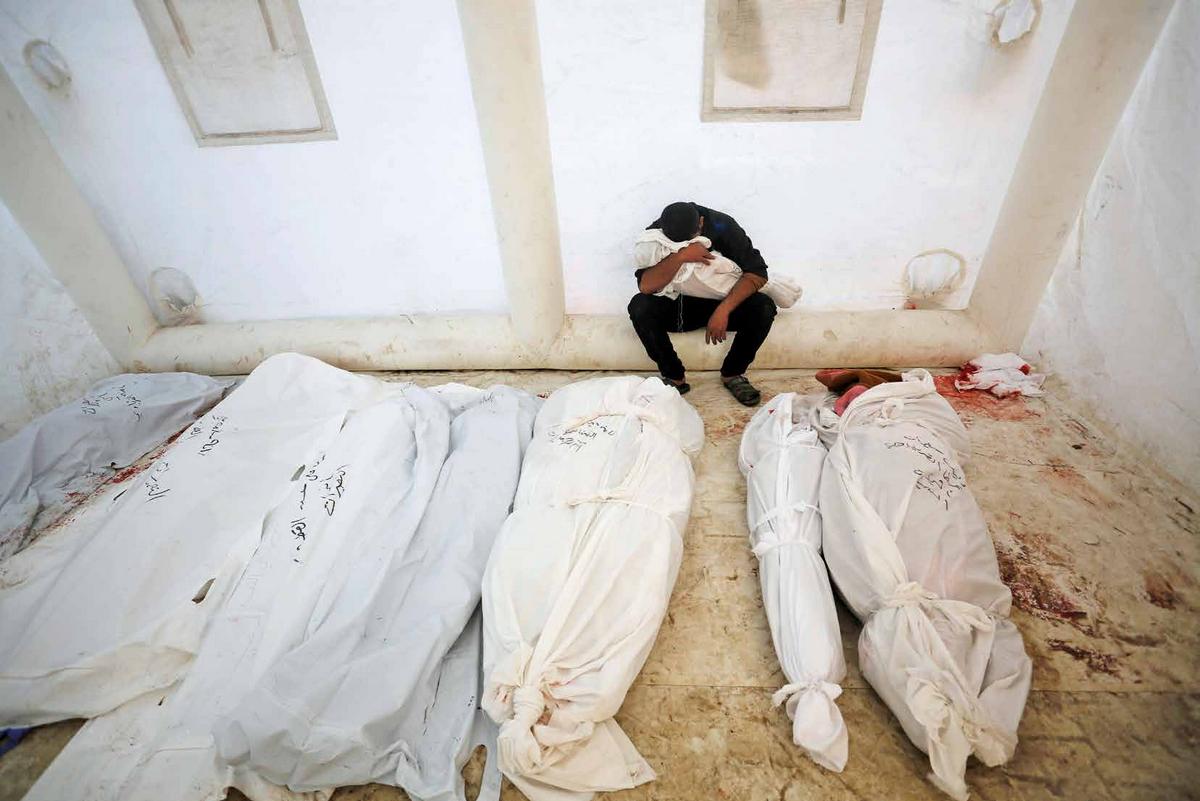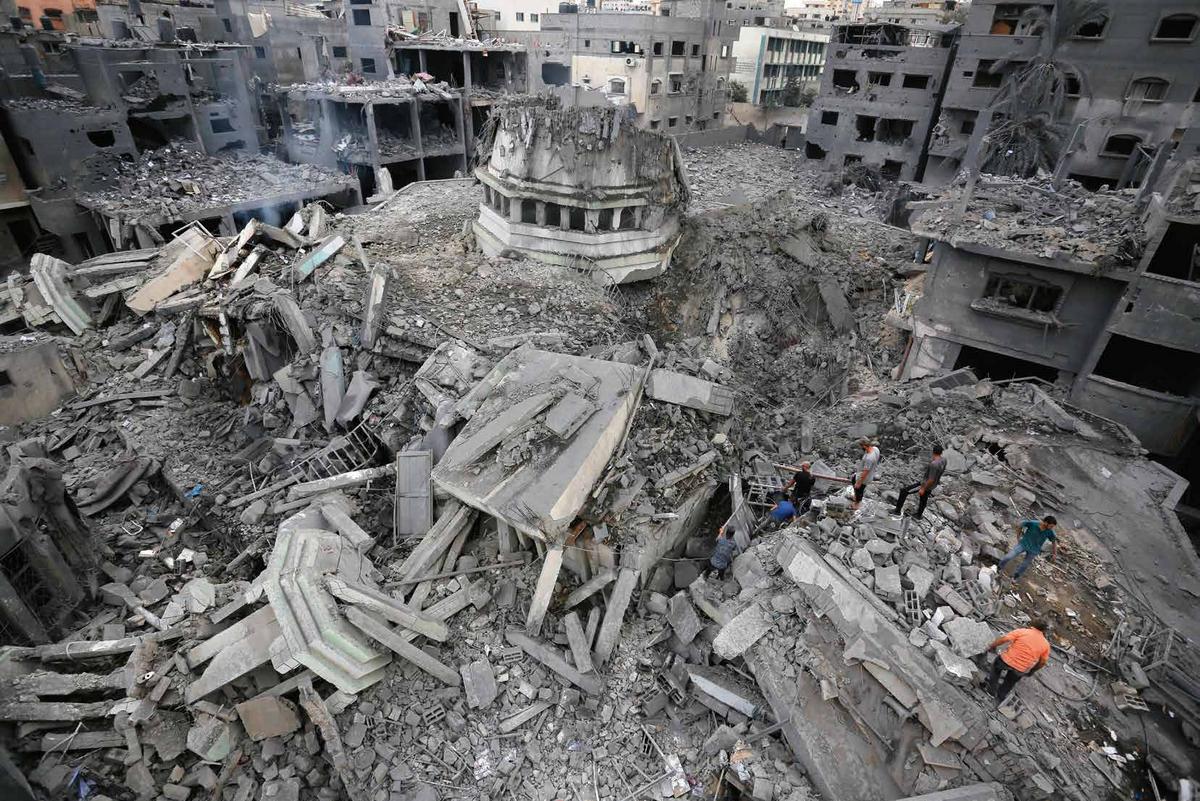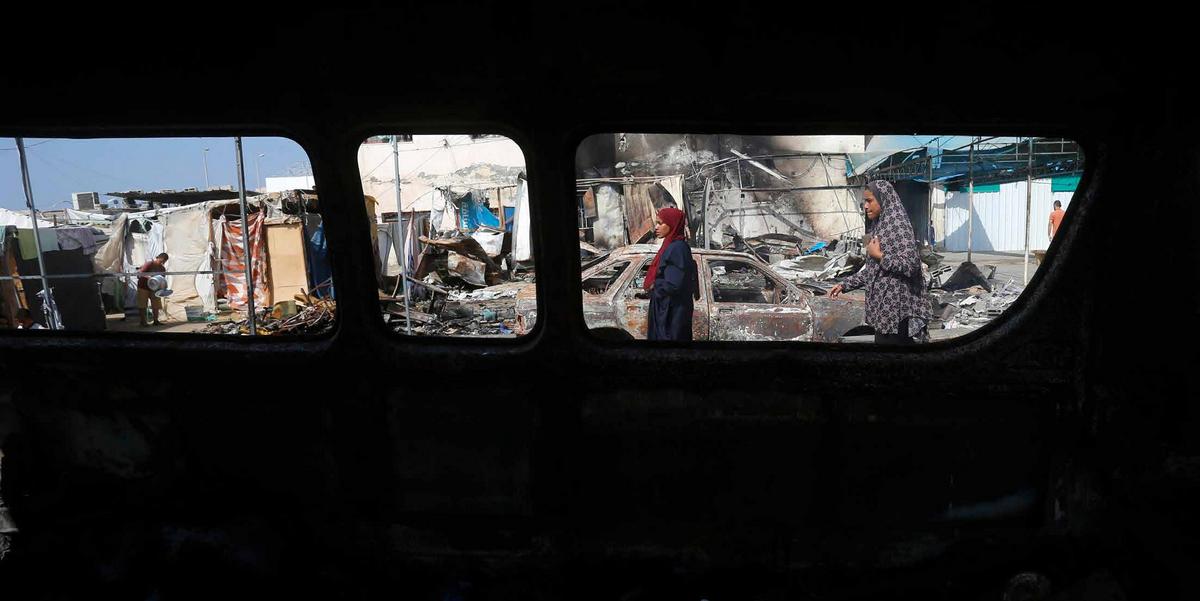

How does it feel to both witness and be involved in what is happening, and to work under the threat of death?
Israel, with its aggressive and merciless force, has been attacking the Palestinian people and invading their territory. The current war in Gaza is unparalleled in its brutality. In my twenty-two years of following Israel’s wars and attacks on Gaza, I have never witnessed atrocities of this magnitude against Palestinian civilians.
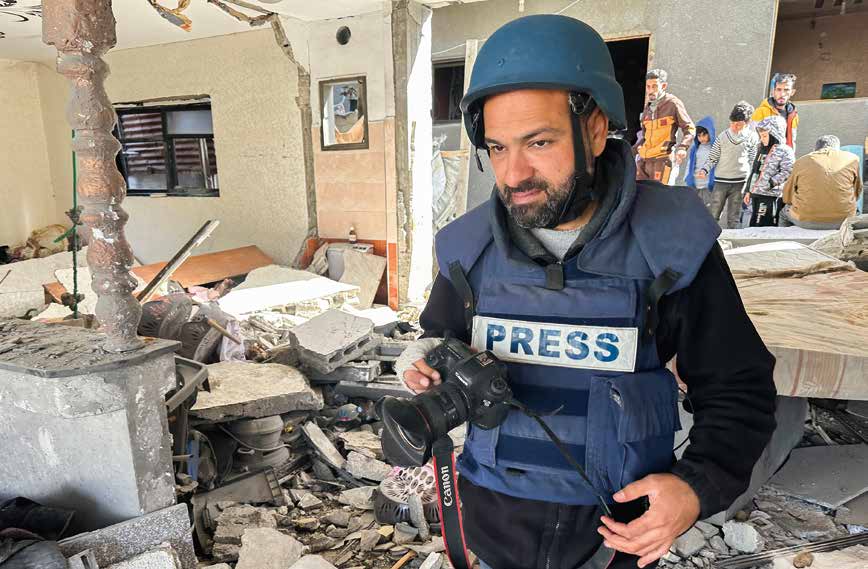
The ongoing war on the Gaza Strip has now reached one hundred and seventeen days. Tens of thousands of Palestinian civilians have been either martyred or wounded in this prolonged conflict. Through the lens of my camera, as a photojournalist for Türkiye’s Anadolu Ajansı. I’ve been documenting the brutal murders committed by Israel against the civilian Palestinian population. The occupier Israel is not only targeting individuals but erasing entire families from the civil registry.
I have been following Israel’s massacres for a long time. But I have never witnessed such brutal massacres against Palestinian civilians, children, women and the elderly, which amounts to mass genocide.
How does it affect you to keep working while your colleagues are martyred?
Indeed, when our friends become martyrs, we are filled with profound feelings of longing, suffering, and separation. This is very difficult for us Palestinian journalists. With those colleagues, we endured this war for many long days.
However, witnessing a colleague being martyred, seeing families of journalist friends ascend to the spiritual rank of martyrdom, observing the homes of journalists bombed, and facing the reality of relatives and friends’ families becoming martyrs—all of these massacres take an immense toll on us. It is a tremendous challenge to endure such hardships.
In these difficult times, we strive with all our might to continue our work, to expose the crimes committed, and to bring these images to the attention of the world. As Palestinian journalists, we have documented the events of this war with a high level of professional dedication, transmitting their images to the global audience.
Our friends who worked in the same office were martyred. Our friend Montaser al-Sawwaf, a cameraman for Anadolu Ajansı, was martyred, for example. Similarly, the family of journalist Ali Jadallah, also an employee of Anadolu Ajansı, met the same fate. We were with our friend Mohammed al-Aloul when his family was martyred and documented what he experienced.
Some of our friends’ families were martyred, while others faced the same fate themselves. However, in order for these stories to be continuously conveyed to the world, this task must continue.
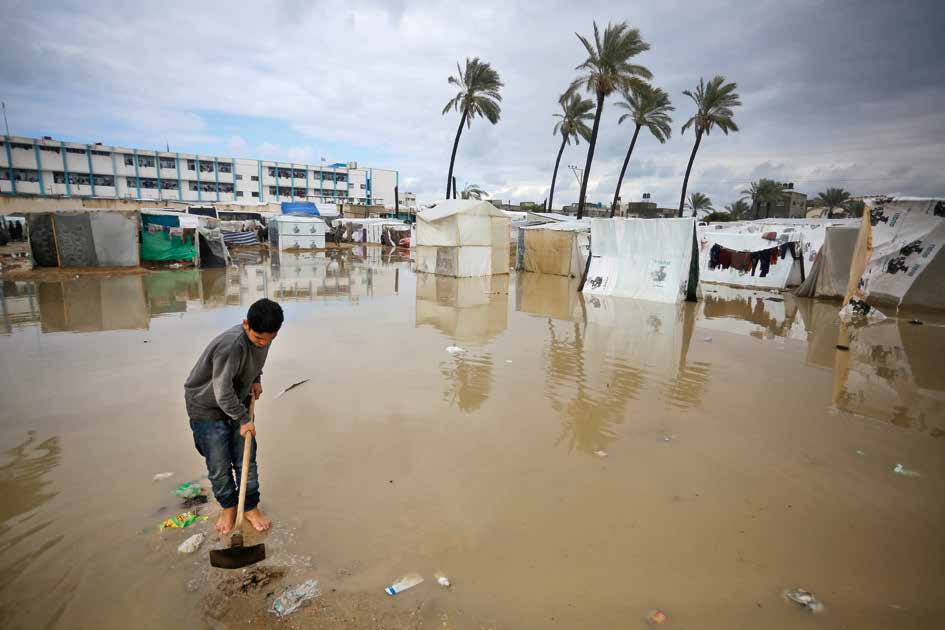
How does your daily life go on?
Life here is extremely difficult. As a press photographer, I wake up in the morning, and then begin photographing the massacres of Israel and the funerals of the martyrs. I am here every day and I am the on-duty photojournalist at the Al-Aqsa Martyrs Hospital. In this regard, I would like to point out that since the beginning of the war, I have not been able to go to my house to rest apart from brief intervals. I have been working almost uninterruptedly. My colleagues and I have set up a small tent near the Al-Aqsa Martyrs Hospital and continue to work there. We are trying to monitor and report on the situation here as much as we can.
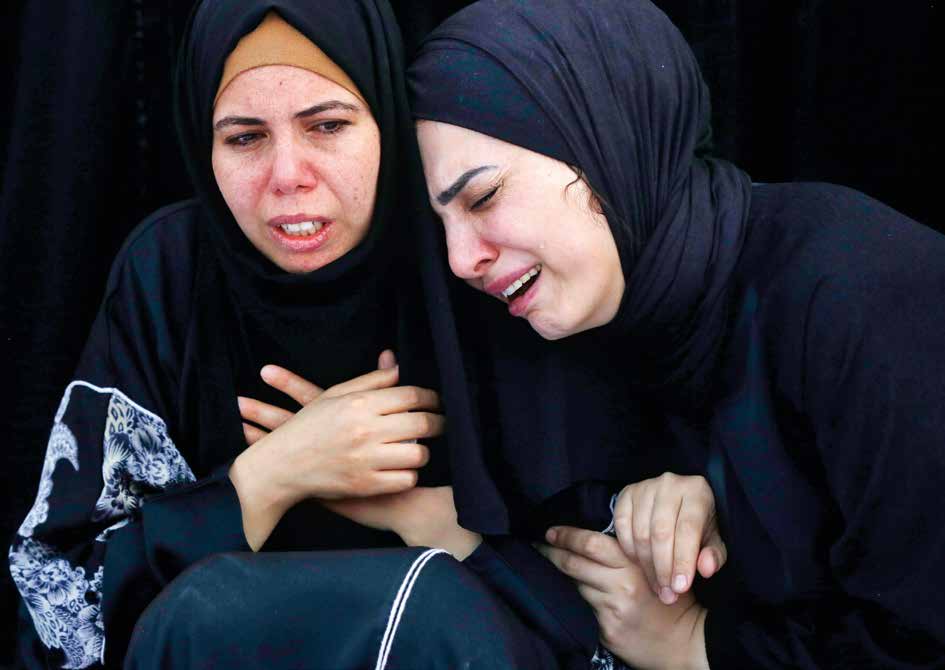
Each day, we wake up to news of more martyrs and the anguished cries of grieving families. Witnessing the loss of our dear friends is an incredibly difficult reality. We are doing our best to navigate this situation, often managing to consume only a single meal a day. We get to eat what everyone else eats. Here, distinctions between a journalist, a medic, a paramedic, a doctor, and a civilian blur in the face of the indiscriminate impacts of war.
Every segment of society, regardless of background, shares the same adversities, endures similar pains, and bears the scars of the ongoing conflict. They all fall victim to the same genocide perpetrated by Israeli forces.
In the course of this war against the Gaza Strip, Israeli forces have targeted and assassinated approximately one hundred and twenty journalists.
What will the Palestine of tomorrow be like?
The Palestine of yesterday, the Palestine of today, and the Palestine of tomorrow... This Palestine belongs to all Palestinians. We will not relinquish this land to Israeli occupation. Palestine is our Palestine. So, we have to keep up our fight. We must persevere on our land.
Despite the relentless pressure imposed by the Israeli occupation, compelling us to leave our land, we have endured the pain and wounds of this territory since its inception. Truthfully, we have never experienced a day of true happiness and comfort in our lives.
Palestinian families endure immense suffering and face numerous hardships. However, with God’s permission, we will persist in living on this land, fueled by hope for a better future where the rights of the Palestinian people are protected.
But the world must also stand by this cause, support this people, protect the rights of the Palestinian people against the Israeli invasion that seeks to displace them.
The Palestinians aspire to the most basic necessities for survival, yearning for a dignified life on their land.
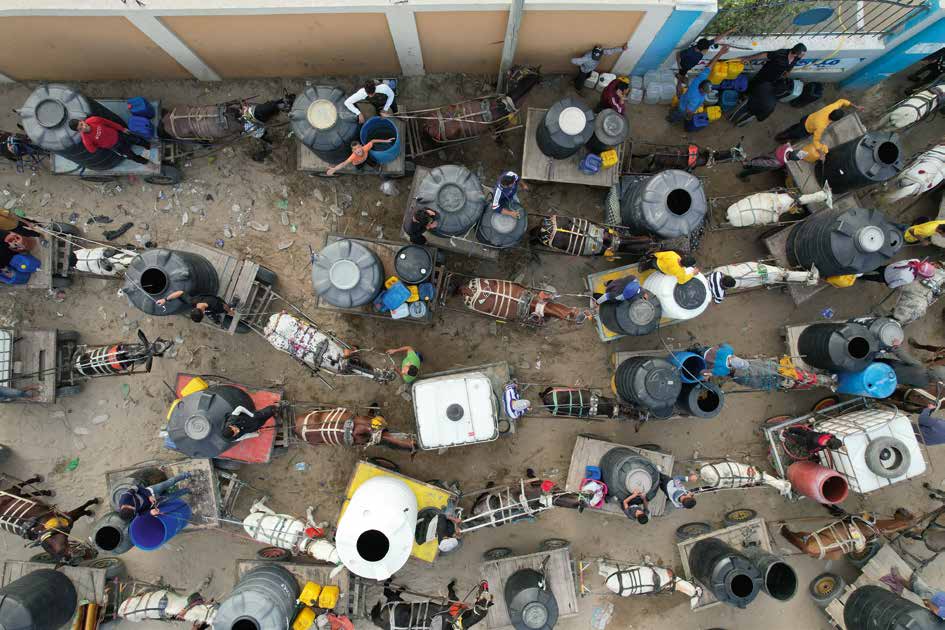
How do you assess the world’s view of what is happening in Gaza?
The whole world sees what is happening in the Gaza Strip with its eyes, hears it with its ears. What is deeply sad, however, is that the world remains silent on this. As a Palestinian journalist, I have never seen such a lack of global outcry against the ongoing massacre perpetrated by the Israeli occupation on the Palestinian people.
We would expect much more than that. We expected much larger masses to take action. We expected much more from the Arab peoples. We expected the countries of the world to do more at the official level. We expected them to support the Palestinian people, to support the Palestinian cause. We expected them to stand with the Palestinians because of the suffering inflicted on them by the Israeli occupation.
It is so demoralizing that a strange silence should prevail in the world. We expected a stronger stance and pressure against the Israeli occupation around the world. We documented everything that happened with the lenses of our cameras and communicated it to the whole world. But the whole world just keeps watching everything. We would not expect to see this shameful attitude on a global official level. This silence on an official level contradicts their proclaimed commitment to human rights, women’s rights, children’s rights especially when women and children in Gaza are facing massacres and enduring a complete genocide.
Has there been a moment when you wanted to quit your profession or leave Gaza?
Despite the profound suffering and tragedies I have witnessed and documented through the lenses of my cameras, the thought of letting go of my lens, stowing away my camera, discarding the microphone, or ceasing to raise my voice has never crossed my mind. I persist in my role, doing my utmost to publicize every aspect of the events unfolding in the Gaza Strip, offering the world a lens through which to see and comprehend the reality.
If I were to drop my camera, who would document these crimes against the Palestinian people? If I were to abandon this camera and lens, who would witness the atrocities perpetrated against civilians? Who would document the suffering enveloping us, the horrors inflicted upon our spouses, families, and children?
I alone have lost eighteen members of my own family. They were all living safely in one house. All of them were martyred by Israeli shelling. The entire family was removed from the population register. There’s no one left. Eighteen members of my family were martyred in their homes in Deir al-Balah.
Have you been harassed verbally or in a written way by Israelis because of your work during this time?
During this time, as Ashraf Amra, the photojournalist, I have faced verbal and written harassment from Israelis. I received threats through mobile phones and directly to my face. Some Israeli news sites and intelligence sites, closely associated with the Israeli government, explicitly mentioned my name in their threats. It is important to note that just a month before this war, I was shot by the Israeli forces in my hand—the hand I was holding my camera with at that moment. I underwent intensive and lengthy treatment in Istanbul.
Two days before the war, I returned from Istanbul with the determination to continue recounting the facts. Even the injury did not deter me from my work, documenting the crimes committed by Israel and sharing them with the world. Israel has employed various methods to silence us—direct targeting, personal threats, and even threats against our families. Despite these efforts, Palestinian journalists, including myself, persist in transmitting our message to the world. We will continue reporting all the crimes committed by Israel to the global community.
Has there been an event where you thought your video camera, camera, or pen simply did not suffice to convey the story as it was? What was the moment that you found most difficult to cope with?
There are numerous stories, numerous narratives, and numerous scenes, some so harrowing that they defy documentation with a camera or a mobile phone, nor is it possible (when one is haunted) by painful memories. Entire families wiped from the population register, scenes of children, scenes of suffering, scenes of wailing… Migration scenes that we did not experience or see during the first migration before 1948. To witness these scenes up close, to see our families bombed and our people destroyed…
These are painful scenes, these are difficult memories. So much so that the more we remember these things, the more we suffer, the more we cry. There are scenes that we try to forget as much as possible. But no matter how much we forget, they remain in a corner of our minds. Despite the suffering and tears, however, I truly don’t want to leave Gaza.
After all this has happened, do you think about getting psychological treatment or quitting the profession?
I don’t want to leave Gaza. That thought doesn’t come to me. When I sit alone and think about it, I don’t see it as very convenient. Where will I go if I leave Gaza? This is the land where I was born. My youth was spent here. Let me be clear, I don’t want to leave the Gaza Strip. Even if my children think about leaving...
When it comes to psychological treatment, we’ll really need intensive psychological treatment after the war, because we have had hard days, hard hours, painful times, troubling moments. It never occurred to us that we would experience such painful and difficult moments.
So much so that even if we receive dozens of sessions of psychological treatment, we cannot forget the hardships and sufferings of the Israeli occupation of Gaza. We have had a very difficult and distressing times as the Palestinian people. These are the toughest days I’ve seen and lived through in twenty-two years.